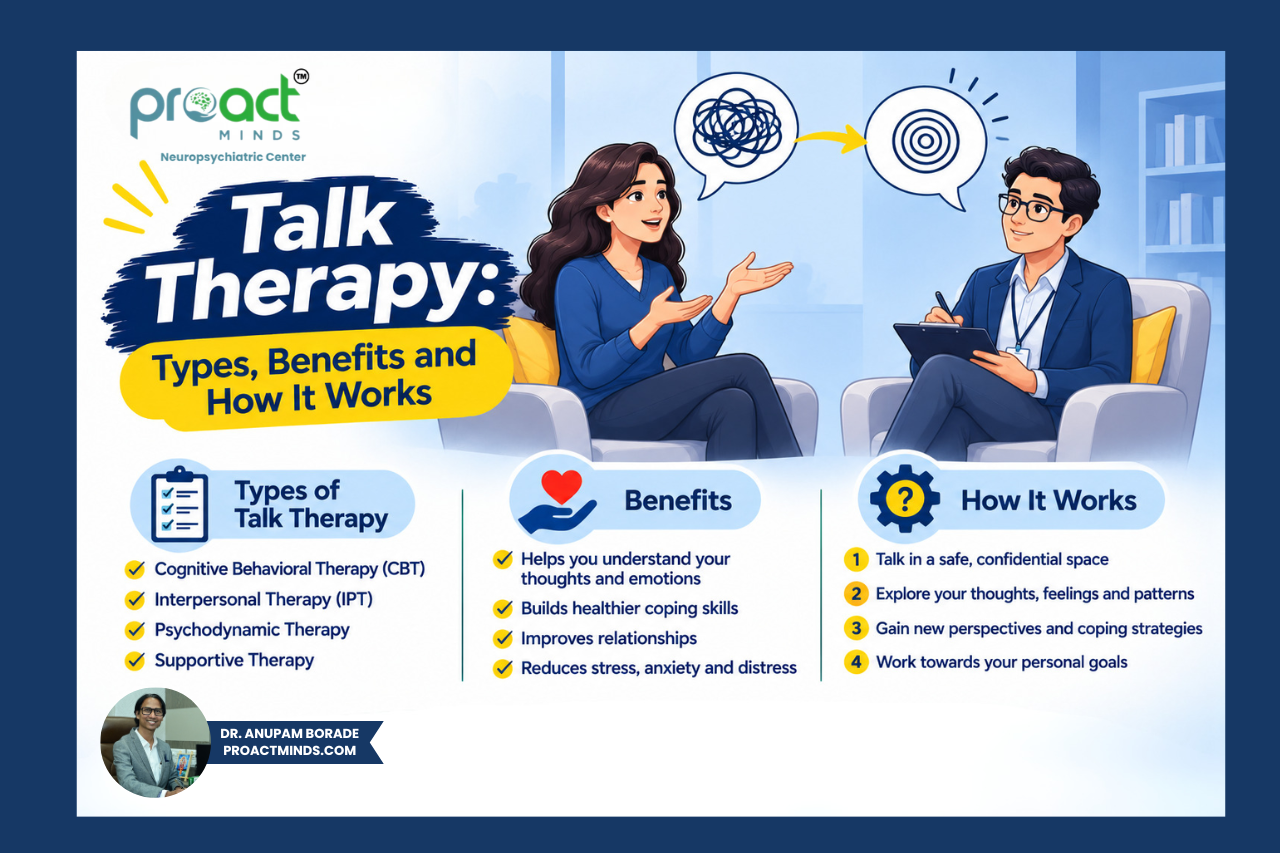
Sometimes, you may have thoughts or feelings that are difficult to explain, even to the people closest to you. You might be dealing with stress, relationship problems, sadness, or concerns that keep coming back. Keeping everything to yourself can make these experiences harder to manage.
This is where talk therapy can help. It gives you a safe space to discuss what you are going through, understand your emotions, and explore healthier ways to deal with challenges.
Whether you are struggling with depression, anxiety, or everyday emotional difficulties, understanding how talk therapy works can help you decide if it is the right step for you.
What Is Talk Therapy?
Talk therapy, also known as psychotherapy, is a form of mental health treatment where you speak with a trained professional about your thoughts, feelings, behaviours, and experiences.
The purpose is not simply to talk about your problems. It also helps you understand why you may be feeling a certain way, recognise patterns in your thinking, and develop practical ways to manage difficult situations.
For example, if you frequently experience negative thoughts or struggle with relationships, a therapist can help you explore these patterns and understand how they influence your emotions and behaviour.
Talk therapy can support people dealing with depression, anxiety, stress, grief, relationship difficulties, and other mental health concerns. It can take place individually, with a partner or family, or in a group, depending on your needs.
How Does Talk Therapy Work?
If you are wondering how does talk therapy work, the process usually begins with a conversation about what has been troubling you. A therapist listens, asks questions, and helps you explore your experiences without judgement.
Over time, you may begin to recognise patterns in your thoughts, understand emotional triggers, and learn ways to respond to difficult situations.
Talk therapy is a collaborative process. You and your therapist work together to identify your concerns and decide what you want to focus on. The approach may differ depending on your needs, the type of therapy, and your progress.
What Happens During a Talk Therapy Session?
A typical session involves discussing your thoughts, emotions, recent experiences, or any challenges you have been facing. Your therapist may ask questions to understand your situation and help you look at it from a different perspective.
You may also learn practical techniques, practise new coping skills, or work on activities between sessions. You are not expected to share everything immediately. You can open up at a pace that feels comfortable.
How Long Does Talk Therapy Take?
There is no fixed duration for talk therapy. Some people benefit from a shorter course of sessions focused on a specific concern, while others may need longer-term support.
The number of sessions depends on factors such as your goals, the nature of your difficulties, and the type of therapy being used. Your therapist can discuss a suitable plan with you and review your progress along the way.
What Are the Different Types of Talk Therapy?
Talk therapy includes different approaches, each designed to help with particular thoughts, emotions, and behaviours. Your therapist may recommend one approach or combine techniques based on your needs.
Cognitive Behavioural Therapy (CBT)
Cognitive Behavioural Therapy focuses on the connection between your thoughts, feelings, and actions. It helps you recognise unhelpful thinking patterns and understand how they influence your behaviour.
For example, if you often assume that you will fail at something, CBT can help you question that thought and consider more balanced ways of looking at the situation. It is commonly used to support people experiencing depression and anxiety.
Dialectical Behaviour Therapy (DBT)
Dialectical Behaviour Therapy is an approach that helps people manage intense emotions and develop healthier responses to difficult situations.
It focuses on skills such as emotional regulation, mindfulness, distress tolerance, and communication. These skills can help you handle overwhelming feelings and improve the way you respond to challenges.
Psychodynamic Therapy
Psychodynamic therapy explores how past experiences and underlying emotional patterns may influence your present thoughts, feelings, and relationships.
It can help you understand recurring difficulties and recognise patterns that you may not have noticed before. This increased awareness can support meaningful changes in how you approach everyday situations.
Humanistic Therapy
Humanistic therapy focuses on personal growth, self-understanding, and your ability to make meaningful choices. It provides a supportive environment where you can explore your feelings without feeling judged.
The therapist helps you understand your experiences, recognise your strengths, and develop a better relationship with yourself.
Interpersonal Therapy (IPT)
Interpersonal Therapy focuses on how relationships and social experiences affect your emotional well-being. It may help when you are dealing with relationship conflicts, grief, loneliness, or major changes in your life.
The approach aims to improve communication, understand relationship patterns, and develop healthier ways of handling interpersonal challenges.
What Are the Benefits of Talk Therapy?
Talk therapy can support your mental well-being in several ways. It gives you an opportunity to understand your experiences, work through emotional difficulties, and develop skills that can help in everyday life.
Helps You Understand Your Emotions
Sometimes, you may know that something is bothering you but struggle to understand exactly what it is. Talking with a therapist can help you identify your emotions, explore possible triggers, and understand why you react to certain situations in particular ways.
Improves Stress and Anxiety Management
Talk therapy can help you recognise what contributes to your stress and worry. You can learn techniques to manage overwhelming thoughts, respond to challenging situations, and avoid getting caught in unhelpful thinking patterns.
Builds Healthy Coping Skills
Difficult situations are a part of life, but how you respond to them can make a difference. Therapy can help you develop healthier ways to manage emotional distress, handle setbacks, and approach problems more confidently.
Improves Relationships and Communication
Understanding your emotions can also improve how you communicate with others. Talk therapy may help you express your needs, establish boundaries, and manage disagreements in a healthier way.
Builds Self-Awareness and Confidence
As you explore your thoughts and experiences, you may begin to understand your strengths, recognise unhelpful patterns, and become more comfortable with yourself. This awareness can help you make decisions that better reflect your needs and values.
Talk Therapy for Depression: How Can It Help?
Depression can affect more than your mood. It may influence your energy, relationships, concentration, sleep, and interest in everyday activities. Talk therapy can provide support as you work through these difficulties.
What Is Talk Therapy for Depression?
Talk therapy for depression is a form of psychological treatment that helps you understand and manage the thoughts, feelings, and behaviours associated with depression.
It gives you a space to discuss what you are experiencing and explore factors that may be contributing to your low mood. Depending on your needs, a therapist may use approaches such as CBT or Interpersonal Therapy.
The aim is to help you develop healthier ways of thinking, improve emotional well-being, and manage everyday challenges.
How Can Talk Therapy Support Someone With Depression?
Talk therapy can help you recognise negative thought patterns, understand emotional triggers, and gradually make changes that support your well-being.
For example, if depression makes you feel that nothing you do is good enough, therapy can help you examine these thoughts and develop a more balanced perspective.
It can also help you work towards manageable goals, improve relationships, and find ways to deal with difficult days. Depending on the severity of depression, therapy may be used alongside medication or other forms of treatment.
When Should Someone Consider Talk Therapy for Depression?
Consider talk therapy if you have been experiencing persistent sadness, loss of interest, hopelessness, or difficulty managing everyday responsibilities.
You do not have to wait until your symptoms become severe to seek support. Speaking with a mental health professional early can help you understand what you are experiencing and explore suitable treatment options.
Do Psychiatrists Do Talk Therapy?
Yes, psychiatrists can provide talk therapy. They are medical doctors with specialised training in mental health and can diagnose mental health conditions, prescribe medication, and provide psychotherapy.
However, not every psychiatrist offers regular therapy sessions. Their role may depend on their training, specialisation, and the treatment approach they follow.
Psychologists and trained psychotherapists also provide different forms of talk therapy. The right professional for you depends on your concerns and the kind of support you need.
Talk Therapy vs. Everyday Conversations: What Is the Difference?
Talking to a friend or family member can provide comfort and emotional support. However, talk therapy is different from an everyday conversation because it follows a structured, professional approach.
During therapy, a trained professional helps you explore your thoughts, identify emotional patterns, and understand how your experiences affect your behaviour. They may also introduce specific techniques to help you manage your concerns.
Unlike a casual conversation, therapy is focused on your mental health needs and personal goals. It provides a dedicated space where you can discuss difficult experiences without worrying about being judged.
Both forms of communication can be valuable, but talk therapy offers professional guidance that everyday conversations may not provide.
How to Know If Talk Therapy Is Right for You?
You may benefit from talk therapy if you frequently feel overwhelmed, struggle to manage your emotions, experience ongoing stress, or find it difficult to deal with personal and relationship challenges.
It may also be helpful if you want to understand yourself better, work through past experiences, or develop healthier coping strategies.
You do not need to have a diagnosed mental health condition to consider therapy. Sometimes, simply wanting a safe space to understand your thoughts and feelings is a good reason to begin.
If you are unsure, you can start with an initial consultation. A mental health professional can help you understand your concerns and decide whether talk therapy is suitable for you.
Frequently Asked Questions
Talk therapy is a form of mental health treatment where you speak with a trained professional about your thoughts, feelings, and experiences. It can help you understand emotional patterns, manage difficult situations, and develop healthier coping skills.
Talk therapy involves discussing your concerns with a mental health professional who helps you explore your experiences and recognise patterns in your thoughts and behaviour. Depending on the approach, you may also learn practical techniques to manage your emotions and everyday challenges.
Yes, talk therapy can help people manage depression by addressing negative thought patterns, emotional difficulties, and challenges in everyday life. Approaches such as CBT and Interpersonal Therapy are commonly used. In some cases, therapy may be combined with medication.
Yes, psychiatrists can provide psychotherapy or talk therapy because they receive specialised training in mental health treatment. However, the type of therapy they offer may depend on their training and clinical practice.
The time needed to notice progress varies from person to person. Some people may notice changes after a few sessions, while others may need longer-term support. The duration depends on your concerns, therapy approach, and individual progress.