A stress test might sound like something that measures how stressed you feel after a week of deadlines, unread messages, and zero personal time. But medically, it means something quite different.
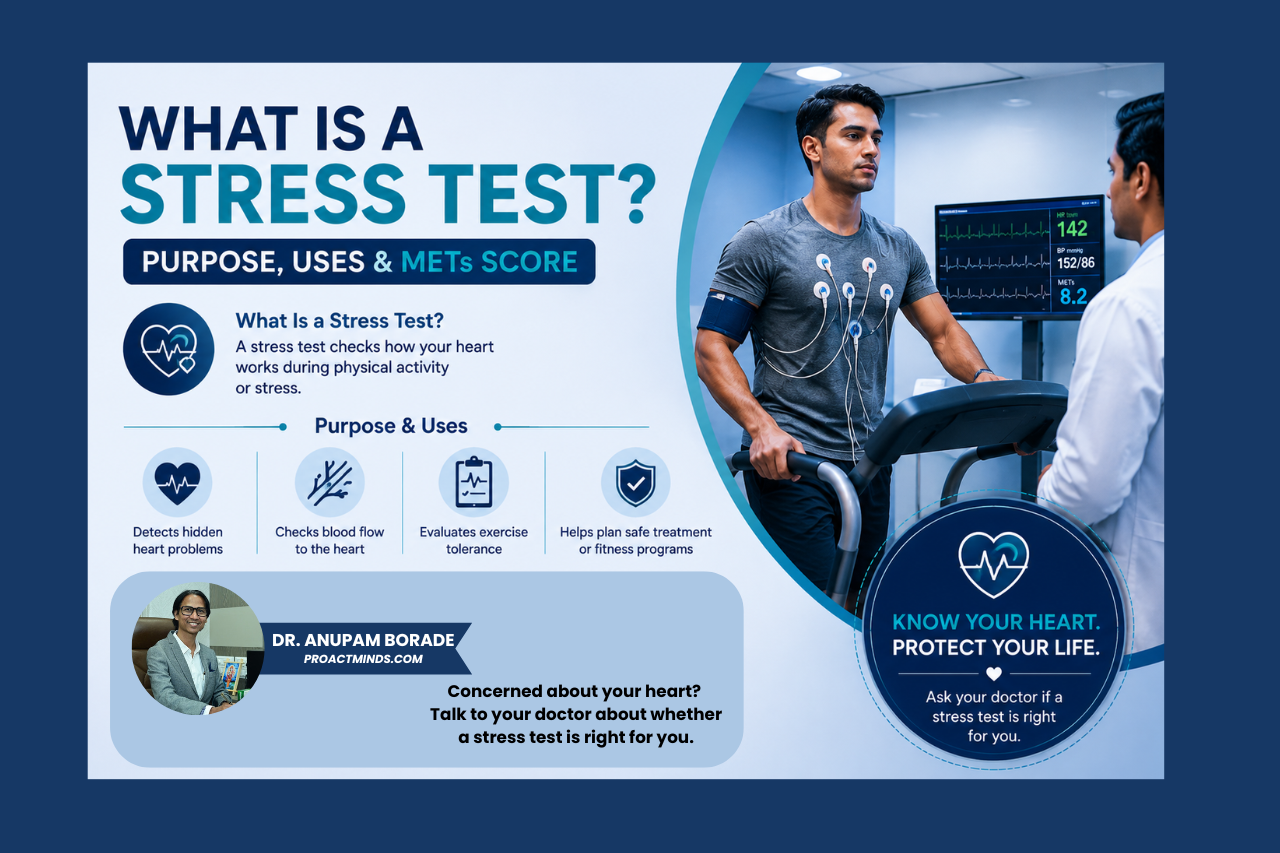
A stress test is a cardiac test that looks at how your heart responds when it has to work harder than it does while you are resting. It can give healthcare professionals useful information about your heart, exercise capacity, and how your cardiovascular system responds to physical activity.
What Does a Stress Test Measure?
Your heart can behave very differently when you are sitting quietly compared with when you are walking uphill or climbing several flights of stairs. A stress test helps healthcare professionals observe that difference in a controlled setting.
During the test, your heart rate, heart rhythm and blood pressure are monitored as your physical workload increases. Depending on the type of test, imaging may also be used to look at how the heart functions under stress.
The test can also help doctors understand whether symptoms such as chest discomfort, breathlessness, dizziness or an unusual heartbeat appear when the heart has to work harder.
What Happens During a Stress Test?
In a typical exercise stress test, you walk on a treadmill or pedal a stationary bicycle. The activity usually begins at a comfortable level and gradually becomes more challenging.
Electrodes attached to your chest monitor the heart’s electrical activity, while your blood pressure and symptoms are monitored throughout the test. You are also asked how you are feeling as the intensity increases.
The purpose is not to see how long you can survive on a treadmill. It is to safely observe how your heart responds when demand increases.
What Is the Purpose of a Stress Test?
So, what is the purpose of a stress test? Simply put, it helps healthcare professionals understand how your heart performs when it is under physical demand.
Some heart-related problems may become easier to identify when the heart needs more oxygen and blood than it does at rest. A stress test can provide information that a resting examination may not reveal.
Why Might a Stress Test Be Recommended?
A healthcare professional may recommend a stress test when certain symptoms appear during physical activity or when there are concerns about cardiovascular health.
For example, a person experiencing unexplained chest discomfort, shortness of breath, dizziness or an unusually fast or irregular heartbeat while exercising may be advised to undergo testing.
A stress test may also be considered for people with known heart conditions or certain cardiovascular risk factors. However, not everyone with these symptoms or risk factors automatically needs one. The decision depends on the individual’s overall health and medical history.
What Can a Stress Test Help Identify?
A stress test can help provide clues about problems such as coronary artery disease, certain heart rhythm abnormalities, and how well the heart responds to exercise.
Depending on the type of stress test, it may also provide information about blood flow to the heart and how effectively different parts of the heart function when the workload increases.
It is important to remember that a stress test is only one part of an assessment. An unusual result does not automatically mean that you have a particular condition, and further testing may sometimes be needed.
What Are the Different Types of Stress Tests?
Not every stress test looks the same. The type chosen depends on what your healthcare professional wants to assess and whether you are physically able to exercise.
Some tests use exercise, while others use medication to make the heart work harder. Certain tests also combine physical stress with imaging to provide a more detailed view of the heart.
Exercise Stress Test
An exercise stress test is one of the most commonly recognised forms of cardiac stress testing.
You usually walk on a treadmill or cycle on a stationary bike while the workload gradually increases. Your heart rhythm, heart rate, blood pressure and symptoms are monitored throughout the process.
The amount of exercise you can tolerate is also recorded. This is where measurements such as METs can become useful in understanding your exercise capacity.
Other Types of Stress Testing
When someone cannot exercise adequately or when a more detailed assessment is required, other types of stress testing may be used.A stress echocardiogram combines exercise or medication with an ultrasound of the heart. A nuclear stress test uses a small amount of radioactive tracer and specialised imaging to assess blood flow through the heart muscle.
The appropriate test depends on your symptoms, health history, physical ability and what the healthcare professional needs to investigate.
What Is a METs Score in a Stress Test?
If you look at a stress test report, you may come across a number called METs. At first glance, it might seem like another mysterious medical abbreviation, but it is actually a way of describing physical workload.
MET stands for metabolic equivalent of task. It is used to estimate how much energy your body uses during an activity compared with when you are resting.
What Do METs Mean?
One MET represents the approximate amount of oxygen your body uses while at rest. As the intensity of an activity increases, the number of METs increases too.
Think of it like a workload scale. Sitting quietly requires relatively little energy, while walking quickly, cycling, or running requires much more. Those activities therefore correspond to higher MET levels.
During an exercise stress test, the METs achieved can give healthcare professionals an idea of your functional exercise capacity and how much physical workload you were able to handle.
What Is a Good METs Score for a Stress Test?
There is no single good METs score for a stress test that applies to everyone. Age, fitness level, sex, medical conditions, and the specific testing protocol can all influence the result.
As a broad clinical reference, exercise capacity below 5 METs is often considered low, around 5 to 8 METs may be considered fair, 9 to 11 METs good, and 12 or more excellent. These categories are general and should not be used to judge an individual’s health without medical context.
Achieving 10 or more METs during an exercise stress test is often considered a favourable sign of exercise capacity. However, your METs score should always be interpreted alongside your symptoms and other test findings.
So, if you are wondering what is a good METs score for a stress test, the better question is: what does this score mean for you?
How Is a Stress Test Performed?
Knowing what will happen before a test can make the experience feel considerably less intimidating.
While the exact process varies depending on the type of stress test, exercise-based testing generally involves preparation, gradually increasing physical activity, and a recovery period.
Before the Test
Your healthcare professional will give you specific instructions before the test. You may receive guidance about eating, drinking, caffeine, smoking and certain medications.
If you are having an exercise-based stress test, comfortable clothing and appropriate footwear can make the process easier.
Do not stop taking prescribed medication unless your healthcare professional specifically tells you to. It is also useful to mention any symptoms or concerns you have before the test begins.
During the Test
Before exercise begins, your resting heart rate and blood pressure are usually recorded. Electrodes may then be placed on your chest to monitor your heart’s electrical activity.
You begin exercising at a manageable pace, and the workload gradually increases. Throughout the test, the healthcare team monitors your heart rate, rhythm, blood pressure and symptoms.
If you experience significant discomfort, severe breathlessness, dizziness, chest pain or other concerning symptoms, the test can be stopped. You are not expected to push through warning signs simply to achieve a higher score.
After the Test
Once the exercise portion ends, you do not simply walk away and call it a day.
Your heart rate and blood pressure are monitored during recovery as your body gradually returns towards its resting state. The healthcare team may continue watching for symptoms or changes in your heart rhythm.
Afterward, your healthcare professional reviews the results and explains what they mean. Depending on the findings, you may need no further testing or may be advised to undergo additional assessment.
Stress Test vs. Everyday Stress: Are They the Same?
Here’s where the word “stress” can become confusing. A cardiac stress test has nothing to do with measuring how overwhelmed you feel by work, studies, relationships or everyday responsibilities. In this context, stress refers to the physical workload placed on your heart. Emotional stress is a different experience and requires a different kind of assessment.
What Is Physical Stress Testing?
Physical stress testing deliberately increases the workload on your cardiovascular system in a controlled environment.
Your heart is asked to work harder while healthcare professionals monitor how it responds. This can reveal changes that might not be noticeable while you are sitting quietly.
The goal is not to exhaust you. It is to safely observe your cardiovascular response to increasing physical demand.
What Is Psychological or Emotional Stress?
Psychological or emotional stress is your body’s response to situations that feel demanding, threatening, or overwhelming.
It can come from academic pressure, work deadlines, relationship difficulties, financial worries, major life changes or simply having too many things happening at once.
Unlike a cardiac stress test, emotional stress is assessed by understanding what you are experiencing, how long it has been happening, and how it is affecting your thoughts, emotions, behaviour, relationships, and daily functioning.
When Should You Seek Professional Support for Stress?
Everyone experiences stress. The bigger concern is what happens when stress stops feeling temporary and begins becoming your normal state.
If you constantly feel overwhelmed, struggle to sleep, cannot concentrate, feel unusually irritable or notice that stress is affecting your work, studies, or relationships, speaking with a mental health professional may help.
At the same time, physical symptoms should not automatically be blamed on emotional stress. Chest pain, fainting, significant breathlessness, or other concerning symptoms may require medical assessment.
When Should You Talk to a Healthcare Professional?
Searching online for what is a stress test can help you understand the basics, but Google cannot tell you whether you personally need one.
That decision depends on your symptoms, medical history, cardiovascular risk factors, and what your healthcare professional is trying to investigate.
Symptoms That Should Not Be Ignored
Chest pain or pressure, unexplained shortness of breath, fainting, dizziness or a racing or irregular heartbeat should not simply be brushed aside, particularly when these symptoms occur during physical activity.
A healthcare professional can assess whether these symptoms may be related to your heart or whether another explanation is more likely.
If symptoms are sudden, severe, or feel different from anything you have experienced before, seek urgent medical attention rather than waiting for a routine appointment.
Getting the Right Type of Assessment
The most useful test is not necessarily the most complicated one.
Depending on your situation, a healthcare professional may recommend an exercise stress test, stress echocardiogram, nuclear stress test, or another form of cardiovascular assessment.
Your symptoms and medical history provide important context when interpreting the results. Even a high METs score does not guarantee that there is no underlying health issue, just as a lower score does not automatically mean you have heart disease.
A stress test is one piece of a much bigger clinical picture.
Conclusion
So, what is a stress test really about? It is a medical test that helps assess how your heart responds when physical activity makes it work harder. It can provide useful information about exercise capacity, heart rhythm, blood pressure response, and possible signs of reduced blood flow.
Emotional stress needs a different kind of assessment. If stress is affecting your sleep, relationships, work, studies, or everyday life, speaking with a mental health professional can help you understand what is happening and what support may be appropriate.
Frequently Asked Questions
A stress test is a medical test that evaluates how your heart responds when it has to work harder than it does at rest. During an exercise stress test, you may walk on a treadmill or cycle while your heart rate, rhythm, blood pressure, and symptoms are monitored.
The purpose of a stress test is to understand how your cardiovascular system responds to physical activity. It can help healthcare professionals investigate symptoms, assess exercise capacity and look for signs that may suggest certain heart-related problems.
A stress test is used to evaluate symptoms such as chest discomfort, breathlessness, dizziness, or unusual heart rhythms that may occur during exercise. It can also help assess exercise capacity and provide information about how the heart responds to increased physical demand.
There is no single good METs score for a stress test for everyone. As a broad reference, 9 to 11 METs may be considered good and 12 or more excellent in some clinical classifications. However, age, fitness, health conditions, and other test findings need to be considered when interpreting the score.
The exercise portion of a basic stress test often lasts around 10 to 15 minutes, although the complete appointment can take longer because preparation and recovery are also part of the process. Tests involving imaging may take additional time.
During an exercise stress test, you usually walk on a treadmill or cycle on a stationary bicycle while the workload gradually increases. Your heart rate, heart rhythm, blood pressure and symptoms are monitored throughout the test.
A stress test can provide valuable information and may identify signs that require further investigation, but it does not diagnose every health condition on its own. Depending on the findings, your healthcare professional may recommend additional tests before reaching a diagnosis.