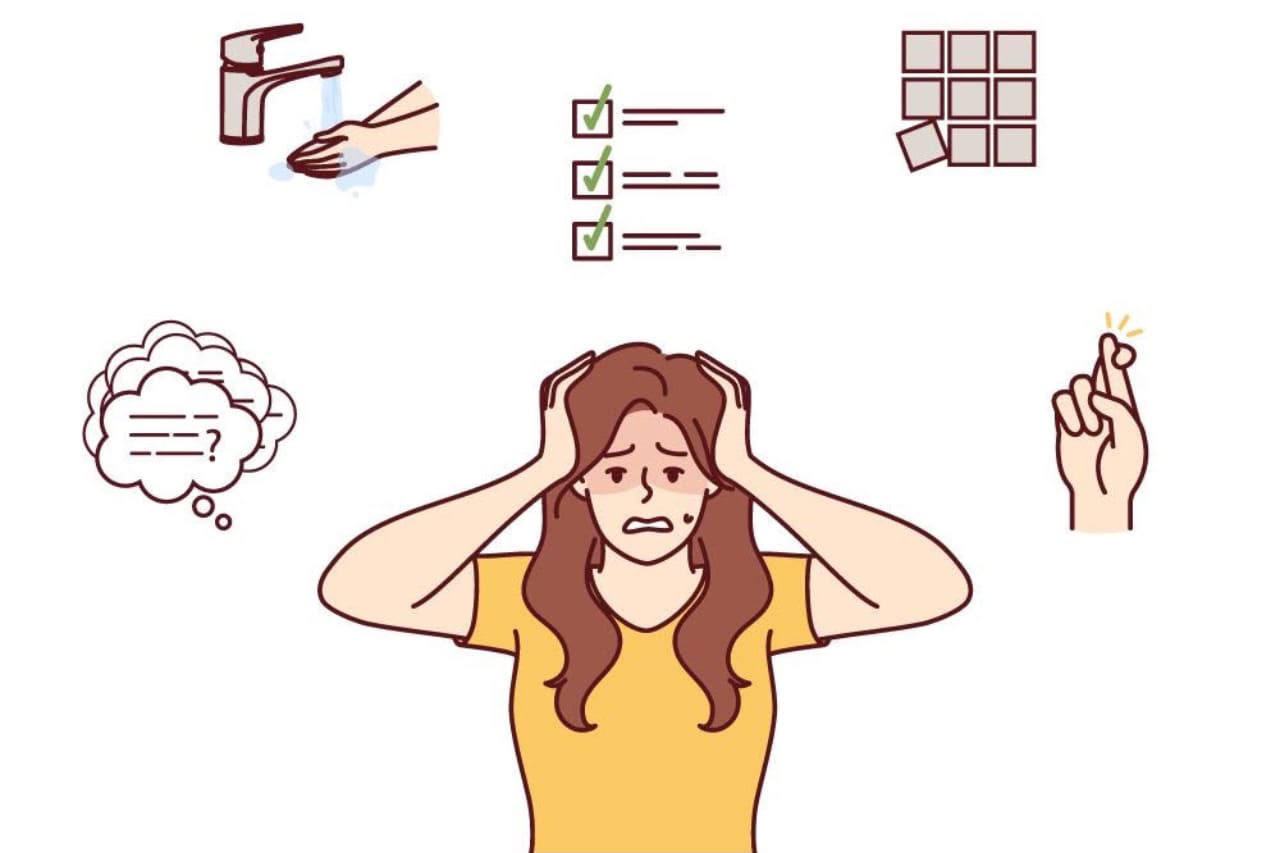
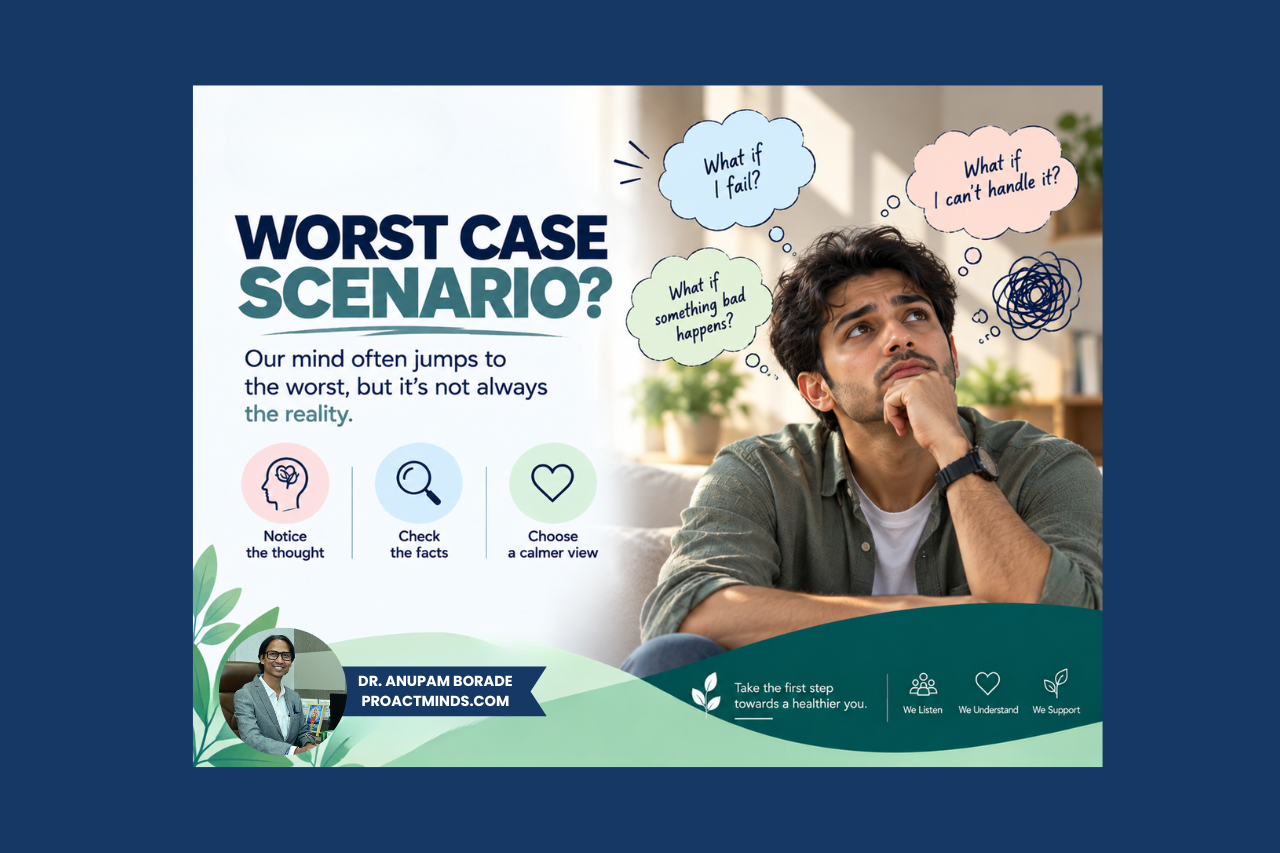
You send a message, but there’s no reply. Suddenly, your mind is wondering if you’ve upset someone. You make one small mistake at work, and you’re already imagining everything going wrong. Sound familiar?
Sometimes, the mind takes one tiny possibility and turns it into an entire story with the worst possible ending. This is called catastrophising, and it can make everyday uncertainties feel much bigger than they are. Understanding why it happens is the first step towards breaking the cycle.
What Is the Worst Case Scenario Meaning in Overthinking?
The worst case scenario meaning refers to imagining the most negative possible outcome of a situation, even when there’s little evidence that it will happen. In overthinking, the mind often treats these imagined outcomes as if they’re already real.
For example, a delayed email response might make you worry that you’ve done something wrong, even when the other person could simply be busy. Your thoughts jump ahead, filling the gaps with frightening possibilities. While thinking ahead can sometimes help us prepare, constantly expecting the worst can leave us feeling anxious about things that haven’t happened.
Why Does the Mind Always Imagine the Worst?
The brain tries to protect us from danger, uncertainty and unpleasant surprises. Sometimes, however, this protective instinct becomes overactive, making us focus more on what could go wrong than on what is actually happening.
Your Brain Tries to Protect You
Imagine your mind as an overprotective friend who keeps reminding you of everything that might go wrong. It believes that anticipating danger will help you avoid getting hurt. This instinct can be useful in genuinely risky situations, but it can also turn everyday experiences into sources of worry.
You might rehearse a difficult conversation repeatedly or imagine every possible problem before making a decision. Your mind is trying to prepare you, but constant threat-checking can leave you exhausted instead of reassured.
Uncertainty Makes You Uncomfortable
Not knowing what will happen can be difficult, especially when something matters deeply to you. Waiting for exam results, a job interview outcome or an important reply can leave plenty of room for your imagination to wander.
When there’s no clear answer, the mind may fill the silence with negative possibilities. Imagining the worst can sometimes feel like a way to prepare for disappointment, but it doesn’t give you control over the outcome. It only makes you experience the worry before you know what will actually happen.
Past Experiences Shape Your Expectations
If you’ve been disappointed, criticised or caught off guard before, you may become more alert to signs that something similar could happen again. Your mind remembers what hurt you and tries to prevent a repeat experience.
For instance, after a difficult relationship, a change in someone’s tone might immediately make you fear that something is wrong. But the present situation may be different from the past. Recognising that difference can help you respond to what’s happening now rather than what happened before.
Stress and Overthinking Feed Each Other
When you’re already stressed, even a small problem can feel like one more thing you can’t handle. Your mind may keep replaying conversations, predicting problems and searching for answers that aren’t available yet.
The more you overthink, the more anxious you may feel. That anxiety can then make the imagined outcome seem even more believable. Breaking this cycle often begins with noticing when your thoughts are going in circles instead of helping you solve a real problem.
Why Do I Always Imagine the Worst Case Scenario?
If you often ask yourself, “Why do I always imagine the worst case scenario?”, you’re not alone. This pattern can happen when you’re dealing with ongoing stress, fear of failure, uncertainty or a strong need to feel prepared for every possibility.
Sometimes, imagining the worst feels safer than allowing yourself to hope. You might think that expecting disappointment will make it hurt less if things go wrong. But constantly preparing for bad news can make it difficult to enjoy good moments, too.
These thoughts don’t mean that something bad is about to happen. They are possibilities created by your mind, not predictions of the future. Learning to recognise the difference can help you approach uncertainty with more balance and kindness towards yourself.
How to Stop Imagining Worst Case Scenarios
You may not be able to stop every worrying thought from appearing, but you can learn to respond to it differently. Instead of arguing with your mind or trying to force every thought away, practise bringing your attention back to what you know and what you can do.
Separate Facts From Assumptions
When a worrying thought appears, ask yourself what you actually know. If your friend hasn’t replied, the fact is that you haven’t received a response yet. The belief that they’re angry with you is an assumption, not confirmed information.
Try writing down the situation, your first thought and a few other possible explanations. This helps you see that your mind’s first interpretation isn’t necessarily the only one. You don’t need to replace every negative thought with a positive one; simply make room for a more realistic view.
Ask Yourself What You Would Tell a Friend
We can be much harsher with ourselves than we are with the people we care about. If a friend worried that one mistake had ruined their future, you probably wouldn’t tell them that their fears were definitely true.
Offer yourself the same patience. Ask what you would say to someone you love in the same situation, then try applying that perspective to your own thoughts. Being kind to yourself doesn’t mean ignoring problems. It means facing them without adding unnecessary criticism or fear.
Focus on What You Can Control
Overthinking often sends you searching for certainty about things you cannot predict. You can’t control how another person will respond, whether every plan will work out or what tomorrow will bring.
You can, however, control your next step. Prepare for the interview, clarify a misunderstanding or complete the task that’s worrying you. If there’s nothing useful to do right now, remind yourself that you can respond when more information becomes available. You don’t have to solve every possible future today.
Bring Your Attention Back to the Present
When your mind starts creating an entire story about what might happen, gently reconnect with what’s around you. Notice your feet on the floor, the sounds in the room or the feeling of taking a slow breath.
You could also take a short walk, listen to music or focus on one small task. These activities help shift your attention away from imagined situations and towards your current experience. The goal isn’t to force your thoughts away, but to stop following every thought down another worrying path.
Set a Time to Process Your Worries
Trying to solve every concern the moment it appears can interrupt your entire day. Instead, set aside a short period to think through your worries and consider whether there’s an action you need to take.
If a worry appears while you’re studying or working, note it down and return to what you were doing. When your chosen time arrives, revisit it calmly. You may discover that some concerns need practical action, while others are uncertainties you can allow yourself to leave unanswered.
When Can Worst-Case Thinking Become a Concern?
Occasionally imagining a bad outcome is a normal part of being human. It becomes more concerning when these thoughts are frequent, difficult to manage or begin affecting your sleep, relationships, studies, work or everyday decisions.
You might find yourself avoiding new experiences because you’re afraid of what could happen, repeatedly seeking reassurance or struggling to relax even when things are going well. If this sounds familiar, you don’t have to manage it alone.
A mental health professional can help you understand the patterns behind your worries and develop healthier ways to respond. Approaches such as cognitive behavioural therapy (CBT) may help people recognise unhelpful thinking patterns and examine them more realistically.
Conclusion
Your mind can imagine a hundred ways a situation might go wrong, but that doesn’t mean any of them will happen. A delayed reply is not automatically rejection, one mistake doesn’t define your future, and uncertainty doesn’t always signal danger.
When you notice yourself imagining the worst, pause and ask: “Is this happening right now, or is my mind telling me a story about what might happen?” That small question can help you create space between a thought and your reaction to it.
If overthinking is making everyday life feel overwhelming, ProactMinds offers counselling support to help you explore your thought patterns and develop healthier coping strategies. Reach out to ProactMinds to take a step towards a calmer, more balanced relationship with your thoughts.
Frequently Asked Questions
Your mind may focus on negative possibilities when you're stressed, uncertain or afraid of being hurt or disappointed. Past experiences can also influence how you interpret present situations. These thoughts are not predictions, and learning to question them can help you develop a more balanced perspective.
Start by separating facts from assumptions, considering alternative explanations and focusing on what you can control. Grounding exercises, writing down worries and setting aside time to process them may also help. If these thoughts regularly interfere with daily life, consider speaking with a mental health professional.
Repeatedly imagining negative outcomes can be associated with anxiety, stress and catastrophising. However, having these thoughts alone doesn't mean you have an anxiety disorder. If they are persistent or distressing, a qualified mental health professional can help you understand what's happening.
Yes. Repeatedly focusing on possible negative outcomes can increase distress and make uncertain situations feel more threatening. Overthinking may also distract you from the information you actually have, making it harder to respond calmly and practically.
Consider seeking support if worrying thoughts are difficult to manage, affect your sleep or concentration, lead you to avoid everyday activities or interfere with your relationships. Counselling can help you identify unhelpful thought patterns and practise ways to manage them more effectively.