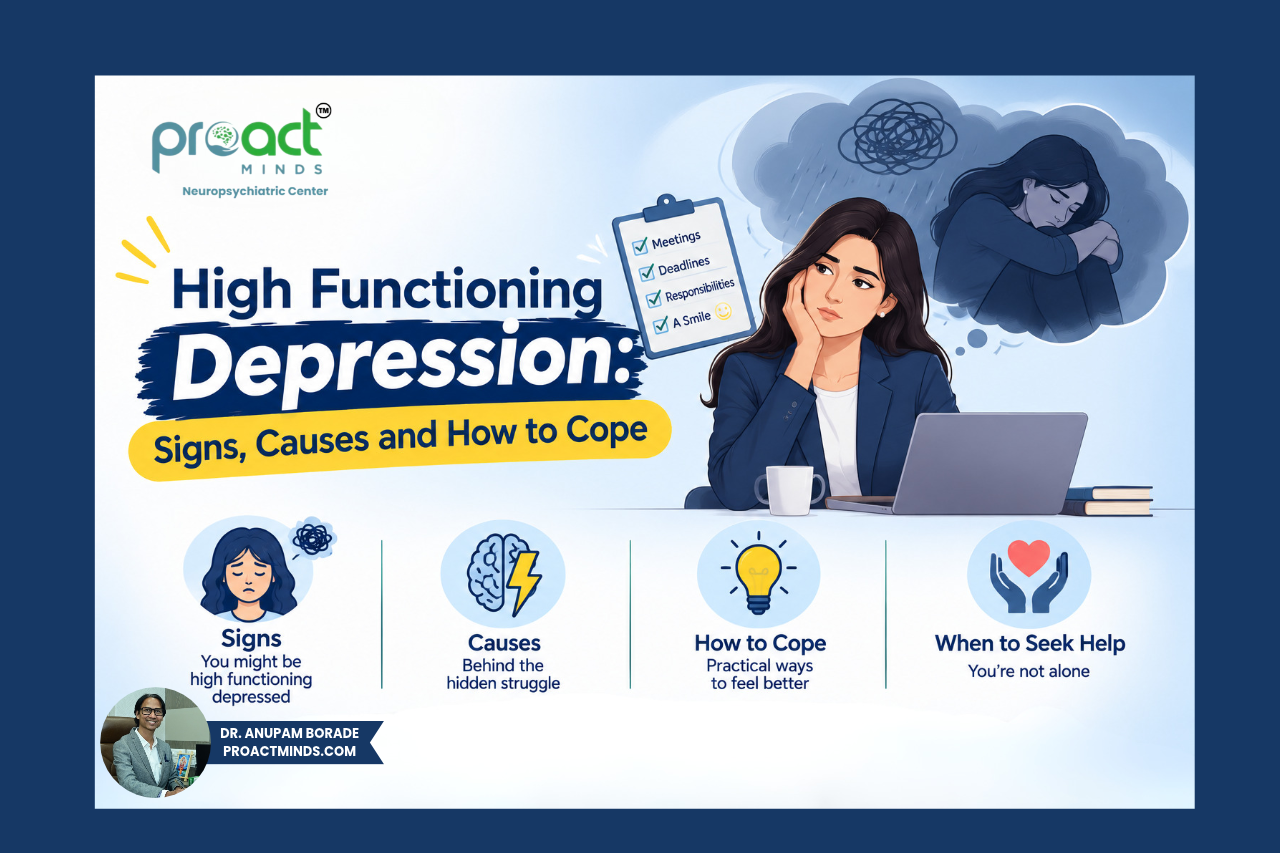
You meet your deadlines, respond to messages, show up for work, and make time for the people around you. From the outside, everything seems fine. But internally, you may be dealing with constant sadness, low energy, or a feeling that something is missing.
This is one way people describe high functioning depression. You may continue managing your everyday responsibilities while quietly struggling with your mental health. Because others may not notice what you are going through, it can be easy to overlook your own feelings, too.
Understanding the signs can help you recognise when you may need support.
What Is High Functioning Depression?
High functioning depression is an informal term used to describe people who experience symptoms of depression while continuing to manage many everyday responsibilities. They may go to work, maintain relationships, socialise, and complete daily tasks, even when they are struggling emotionally.
It is important to know that high functioning depression is not a separate clinical diagnosis. It describes how depression can affect someone who appears to be functioning well on the outside. It may overlap with conditions such as persistent depressive disorder, but only a mental health professional can assess and diagnose these conditions.
The difficult part is that being able to carry on with your routine does not necessarily mean you are feeling okay. You might be meeting everyone’s expectations while ignoring your own emotional needs.
What Are the Common Signs and Symptoms of High Functioning Depression?
High functioning depression can be difficult to recognise because the symptoms are not always visible to others. You may continue with your usual routine while experiencing emotional and physical changes.
Some common signs include:
Persistent Sadness or Feeling Low
You may experience a constant low mood, emptiness, or sadness that does not seem to go away. Even when something positive happens, you might find it difficult to feel genuinely happy.
Constant Tiredness and Low Energy
Everyday activities may leave you feeling exhausted. You might complete your work and responsibilities but feel completely drained by the end of the day, even without much physical activity.
Loss of Interest in Activities
Things you once enjoyed, such as meeting friends, watching movies, or pursuing hobbies, may no longer feel exciting. You may still participate in these activities but find it difficult to enjoy them.
Difficulty Concentrating
You may struggle to focus, remember small details, or make decisions. Even simple tasks can require more mental effort than they used to.
Changes in Sleep and Eating Habits
You might find yourself sleeping too much, struggling to fall asleep, or waking up frequently. Changes in appetite, such as eating more or less than usual, may also occur.
Hiding Emotions Behind a Smile
You may appear cheerful around others, make jokes, and say that everything is fine while keeping your difficult emotions to yourself. Sometimes, you may avoid talking about your feelings because you do not want to worry anyone.
Negative Thoughts and Low Self-Esteem
You may frequently criticise yourself, feel that you are not doing enough, or compare yourself with others. Even when you achieve something, you might struggle to feel proud of yourself.
These symptoms can vary from person to person. Experiencing some of them does not automatically mean you have depression, but persistent changes deserve attention.
What Causes High Functioning Depression?
There is no single cause of high functioning depression. Different experiences, biological factors, and long-term emotional patterns may contribute to depressive symptoms.
Stressful Life Experiences
Difficult experiences such as losing a loved one, relationship problems, financial pressure, or major life changes can affect your emotional well-being. Sometimes, the impact of these experiences continues long after the situation has passed.
Genetic and Family History
A family history of depression may increase a person’s vulnerability to experiencing it. However, genetics alone do not determine whether someone will develop depression.
Long-Term Emotional Stress
Constant pressure at work, academic responsibilities, family expectations, or unresolved personal problems can gradually affect your mental health. When stress continues without enough time to rest and recover, it may become harder to manage your emotions.
Personality Traits and Perfectionism
People who put a lot of pressure on themselves, struggle to say no, or feel the need to meet everyone’s expectations may find it difficult to acknowledge when they are struggling. Perfectionism is not a diagnosis or a direct cause, but these patterns can add to emotional stress.
High Functioning Depression vs. Regular Depression: What Is the Difference?
The main difference people often refer to is how symptoms appear in everyday life. With high functioning depression, someone may continue meeting responsibilities despite experiencing symptoms internally. With other presentations of depression, difficulties with daily activities may be more noticeable.
However, high functioning depression is not a separate medical category from regular depression. Both can involve symptoms such as persistent sadness, low energy, loss of interest, and difficulty concentrating.
High functioning depression: A person may continue working, studying, and socialising while privately struggling with their emotions. They may appear productive and manage their responsibilities, making their difficulties less noticeable to others.
Other presentations of depression: Everyday responsibilities may become harder to manage. A person may experience noticeable changes in their mood, withdraw from activities, or struggle to maintain their usual routine.
These are general descriptions, not diagnostic rules. Someone who continues working or socialising can still experience significant depression and deserve support.
Do I Have High Functioning Depression? When Should You Be Concerned?
If you have been asking yourself, “Do I have high functioning depression?”, it may help to pay attention to how you feel beyond your daily responsibilities.
Ask yourself:
– Do I often feel sad, empty, or emotionally exhausted?
– Have I lost interest in activities I once enjoyed?
– Do I feel tired even when I have completed my usual routine?
– Do I hide my emotions because I do not want others to worry?
– Do I constantly criticise myself or feel that I am not good enough?
– Do I find it difficult to enjoy achievements, even when things go well?
These questions are not a diagnostic test. They can simply help you reflect on your emotional well-being. If these feelings persist or affect your quality of life, consider speaking with a mental health professional.
How to Cope With High Functioning Depression?
Learning how to cope with high functioning depression begins with recognising that your emotional needs matter just as much as your everyday responsibilities. Small changes can support your well-being, but they should not replace professional care when needed.
Speak to a Mental Health Counsellor
Talking to a counsellor can help you understand your emotions and identify patterns that may be affecting your mental health. You do not need to wait until things become overwhelming to seek support.
Build a Healthy Daily Routine
Try creating a routine that includes regular meals, enough sleep, and breaks between responsibilities. Keep your goals realistic instead of filling every hour with tasks.
Stay Connected With Friends and Family
Spending time with people you trust can help you feel supported and less isolated. Even a short conversation or a simple check-in can make it easier to open up about what you are experiencing.
Practise Mindfulness and Relaxation
Activities such as deep breathing, meditation, or quiet time away from screens may help you slow down and become more aware of your thoughts and feelings.
Make Time for Physical Activity
Gentle activities such as walking, stretching, cycling, or yoga can support your overall well-being. Start with something manageable rather than putting pressure on yourself to follow an intense exercise routine.
Set Realistic Goals and Boundaries
You do not have to say yes to every request or meet every expectation. Learn to recognise when you need a break, divide large tasks into smaller steps, and give yourself permission to rest.
Express Your Feelings Through Journaling
Writing down your thoughts can help you understand what you are feeling and notice recurring concerns. You can write freely without worrying about grammar, structure, or finding the perfect words.
When Should You Seek Professional Help for High Functioning Depression?
Being able to manage your responsibilities does not mean you should ignore emotional distress. Consider seeking professional help if sadness, low energy, loss of interest, or negative thoughts continue for several weeks or begin affecting your relationships, work, sleep, or overall well-being.
A mental health professional can assess your symptoms, understand what you are experiencing, and recommend suitable treatment. This may include counselling, psychotherapy, or medication when appropriate.
You Don’t Have to Hide What You Are Feeling
You can be successful at work, maintain relationships, and keep up with your responsibilities while still struggling emotionally. One does not cancel out the other.
High functioning depression reminds us that mental health struggles are not always visible. Just because you appear fine to everyone else does not mean you have to ignore what is happening inside.
Give yourself the same understanding and patience that you would offer someone you care about. Recognising your feelings, reaching out for mental health support, and taking small steps towards your well-being are all meaningful beginnings. You deserve support even when you seem to have everything under control.
Frequently Asked Questions
High functioning depression is an informal term used to describe people who experience symptoms of depression while continuing to manage everyday responsibilities. They may appear fine to others while privately struggling with low mood, tiredness, or loss of interest.
Common signs include persistent sadness, low energy, difficulty concentrating, changes in sleep or appetite, loss of interest in activities, negative thoughts, and hiding emotions from others.
Being able to work, study, or socialise does not rule out depression. If you continue experiencing symptoms such as low mood, emotional exhaustion, or loss of interest, consider discussing them with a mental health professional.
Building a healthy routine, staying connected with loved ones, practising relaxation, journaling, and making time for physical activity may support your well-being. However, these habits do not replace professional treatment when it is needed.
Depressive symptoms can persist or become more difficult to manage without appropriate support. This is why it is important to recognise changes in your emotional well-being and seek professional guidance when needed.