Have you ever imagined your life as a movie where everything has a deeper meaning, every awkward moment is part of the plot, and you are somehow waiting for your “main character moment”?
The internet turned this idea into a popular phrase: Main Character Syndrome. It is often used casually to describe someone who sees themselves as the centre of their own story. Sometimes, it can simply be a fun way of looking at life. But when taken too far, it can also raise interesting questions about self-image, attention, loneliness and the need for validation.
What Is Main Character Syndrome?
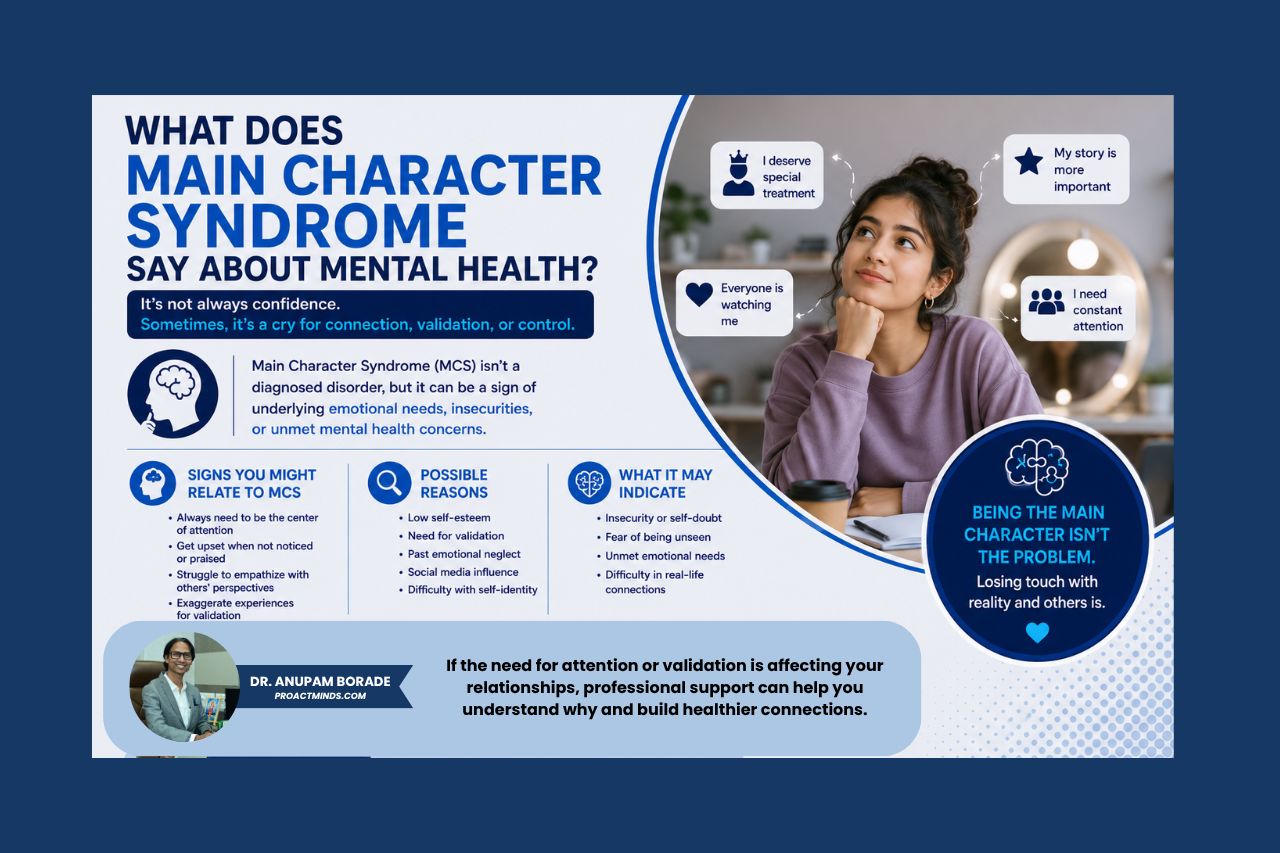
Main Character Syndrome is an informal term, not a recognised mental health diagnosis. It describes a tendency to view yourself as the central character in your own life, almost as though everyday experiences are scenes in a personal movie.
There is nothing automatically unhealthy about wanting to feel important in your own story. The concern comes when this mindset affects how you see other people, relationships or reality.
Understanding the Main Character Meaning
The main character meaning is fairly simple: seeing yourself as the central person in your own life story.
In a healthy sense, this can mean taking ownership of your choices, enjoying your individuality, and being intentional about your life. Problems can arise when being the “main character” starts meaning that everyone else is treated like a supporting character.
Why Did Main Character Syndrome Become So Popular?
Social media made the idea of being the “main character” almost impossible to miss. A coffee run becomes a cinematic moment, a solo walk gets its own soundtrack, and an ordinary Tuesday suddenly has a carefully edited aesthetic.
There is nothing wrong with enjoying these moments. In fact, finding meaning in everyday experiences can be positive. The important part is whether the online persona starts replacing a realistic view of everyday life.
Is Main Character Syndrome a Mental Health Condition?
No. Main Character Syndrome is not an official psychiatric diagnosis.
It is an internet phrase that can describe certain behaviours or attitudes. However, some of the patterns associated with it, such as an intense need for validation, difficulty accepting criticism, or feeling disconnected from others, may sometimes overlap with broader emotional or psychological concerns.
When Main Character Energy Is Healthy
Seeing yourself as the main character can actually have a positive side.
It may encourage you to take responsibility for your choices, pursue meaningful goals, enjoy your individuality, and stop comparing your life to everyone else’s. In this sense, you are not waiting for someone else to write your story for you.
When It Starts Affecting Relationships
The problem begins when your personal storyline leaves no room for anyone else’s.
If you constantly expect attention, assume situations are about you, or struggle to consider what other people may be experiencing, relationships can become difficult. Healthy confidence still leaves room for empathy.
What Are the Signs of Main Character Syndrome?
There is no official checklist for Main Character Syndrome, but certain behaviours are commonly associated with the term.
The key is not whether you occasionally relate to these behaviours. Most people do sometimes. What matters is whether the pattern is persistent and begins affecting your relationships or wellbeing.
Everything Feels Like It Is About You
You might interpret unrelated events as having something to do with you. A friend’s short reply may feel like a personal rejection, while someone being distracted can seem like they are deliberately ignoring you.
This can make everyday interactions emotionally exhausting because neutral situations are constantly being given personal meaning.
A Strong Need for Attention or Validation
You may feel particularly good when people notice, praise, or admire you and unusually low when they do not.
Social media can amplify this because likes, comments, views and followers provide instant feedback. When external validation becomes closely tied to self-worth, silence can start feeling like rejection.
Romanticising Your Life Constantly
There is nothing wrong with romanticising your morning coffee or pretending your commute has a movie soundtrack.
But if you constantly feel that your real life should look cinematic, ordinary moments can begin to feel disappointing. Real life is messy, repetitive and occasionally boring. It does not always need a dramatic plot.
Struggling When Things Do Not Go Your Way
A main-character mindset can sometimes create unrealistic expectations that life should follow a particular storyline.
When reality does not cooperate, disappointment can become intense. You may feel like the universe is against you rather than recognising that uncertainty and setbacks are normal parts of life.
Main Character Syndrome vs. Healthy Self-Confidence
Being confident and being self-centred are not the same thing.
Healthy confidence allows you to value yourself while recognising that other people have equally complex lives, feelings and perspectives.
Confidence Leaves Room for Other People
A confident person can celebrate their achievements without needing everyone else to feel smaller.
They can listen, apologise, accept feedback and recognise when someone else needs attention. Their self-worth does not depend entirely on being the most interesting person in the room.
Self-Centred Thinking Can Feel Very Different
When everything revolves around your own importance, other people’s experiences can become easy to overlook.
You may interrupt conversations, struggle to empathise, or become frustrated when attention shifts away from you. Over time, this can affect friendships, family relationships and romantic connections.
What Is Protagonist Syndrome?
Protagonist syndrome is another informal phrase sometimes used in discussions about Main Character Syndrome.
Like the main-character concept, it describes someone who views their life through the lens of being the central protagonist. The term itself is not a clinical diagnosis.
Protagonist Syndrome and Social Media
Social media can make protagonist syndrome particularly tempting because platforms allow people to carefully edit how their lives are presented.
When you constantly see polished versions of other people’s lives, you may start feeling like your own life needs to be equally exciting, aesthetic, or meaningful.
When the Story Becomes More Important Than Reality
There is a difference between enjoying your own narrative and needing reality to match it.
If you constantly create imaginary scenarios, expect life to unfold dramatically, or become disappointed when ordinary life feels ordinary, it may be useful to step back and ask whether your expectations are realistic.
What Is Hero Syndrome?
Hero syndrome is different from Main Character Syndrome, although the two ideas can sometimes overlap.
Hero syndrome generally refers to a strong desire to be seen as a rescuer or saviour. Someone may repeatedly place themselves in situations where they can solve problems, help others, or receive recognition for being needed.
Wanting to Help vs. Needing to Be the Hero
Helping people is healthy. Wanting to make a difference can be a wonderful quality.
The concern arises when helping becomes tied to needing admiration, recognition or a sense of importance. If you only feel valuable when someone needs saving, your self-worth may become dependent on being the hero.
Why Recognition Can Become Important
For some people, being needed provides a powerful sense of identity.
They may take on responsibilities that are not theirs, struggle to let others handle problems independently, or feel uncomfortable when they are not the person solving everything. Understanding this pattern can help create healthier boundaries.
What Can Main Character Syndrome Tell Us About Mental Health?
The phrase itself is not a mental health diagnosis, but the behaviours behind it can sometimes offer clues about how someone relates to themselves and others.
A strong need to be seen, admired, or constantly validated may sometimes reflect deeper insecurities, loneliness, or difficulties with self-esteem.
The Connection Between Validation and Self-Worth
When self-worth depends heavily on other people’s reactions, validation can become addictive.
A compliment can create a temporary confidence boost, while being ignored or criticised can feel disproportionately painful. Building a more stable sense of self can reduce this emotional dependence on external approval.
Could It Be Linked to Loneliness?
Sometimes, constantly imagining yourself as the centre of a story can be a way of making life feel more meaningful.
If someone feels disconnected from others, creating an internal narrative may provide comfort or excitement. This does not automatically indicate a mental health problem, but persistent loneliness is worth paying attention to.
When Self-Focus Becomes Distressing
Self-focus becomes more concerning when it causes significant distress or repeatedly damages relationships.
If you constantly worry about how others perceive you, depend heavily on validation or struggle to cope when attention is not on you, speaking with a mental health professional may help you understand what is happening underneath the behaviour.
How to Build a Healthier Relationship With Yourself
You do not need to stop feeling special or enjoying your own story. The goal is to create a version of self-confidence that does not require everyone else to become background characters.
Let Yourself Be Important Without Being the Only One
Your experiences matter. So do everyone else’s.
Practising empathy, listening without immediately bringing the conversation back to yourself, and becoming curious about other people’s experiences can create healthier relationships.
Reduce the Need for Constant Validation
Try noticing how often you look outside yourself for reassurance.
Instead of immediately checking likes, asking whether someone noticed your achievement or comparing your life with someone else’s, practise recognising your own progress without needing an audience.
Make Space for Ordinary Life
Not every day needs to be exciting, productive or Instagram-worthy.
Allowing yourself to experience boring afternoons, imperfect plans and uneventful days can actually make life feel more realistic and less exhausting. Your life does not need a cinematic soundtrack to have value.
When Should You Seek Professional Support?
Having Main Character Syndrome moments is not automatically something that needs treatment. Most people occasionally want attention, imagine dramatic scenarios, or romanticise their lives.
Professional support may be useful when these patterns become persistent, distressing, or begin affecting relationships, work, studies, or everyday functioning.
Signs That Support May Help
You may benefit from talking to a professional if you constantly depend on validation, feel deeply rejected when attention shifts away from you, or repeatedly struggle with relationships because of self-focused behaviour.
It can also help if you feel lonely, insecure or emotionally overwhelmed beneath the confident image you present to others.
How ProactMinds Can Help
You do not have to wait until a social media trend becomes a serious problem before reflecting on your mental wellbeing.
At ProactMinds, mental health professional support can provide a safe space to explore self-esteem, relationships, validation, loneliness and other emotional concerns.
Counselling can help you understand how you see yourself and how that self-image affects your relationships and everyday life.
The goal is not to make you less confident. It is to help you develop a more stable sense of self that does not depend entirely on attention or approval.
Frequently Asked Questions
Main Character Syndrome is an informal term for a tendency to view yourself as the central character in your own life story. It is not an official mental health diagnosis and can describe anything from harmless self-expression to more self-centred patterns that affect relationships.
The main character meaning refers to seeing yourself as the central person in your own life story. In a healthy sense, it can mean taking ownership of your life and choices. It becomes less healthy when other people's feelings and perspectives are consistently ignored.
Protagonist syndrome is an informal term similar to Main Character Syndrome. It describes a tendency to view your experiences as though you are the central protagonist of a story. It is not a recognised mental health condition.
Hero syndrome refers to a tendency to strongly identify with being a rescuer or someone who solves other people's problems. Wanting to help others is not unhealthy, but constantly needing to be needed or admired can become problematic.
No. Main Character Syndrome is not a recognised mental health disorder. However, some behaviours associated with the term, such as excessive need for validation, loneliness or relationship difficulties, may sometimes be connected to broader emotional or psychological concerns.