Stress is a normal part of life, but when responsibilities keep piling up and your mind rarely gets a break, it can start affecting your well-being. You might feel tired even after sleeping, become irritated over small things, or struggle to concentrate on tasks that once felt manageable.
Recognising overstressed symptoms early can help you understand what your mind and body need before stress begins interfering with your everyday life.
What Is the Overstressed Meaning?
The overstressed meaning refers to a state in which a person feels overwhelmed by ongoing pressure, responsibilities, or emotional demands. It can happen when the challenges you face begin to feel greater than your ability to manage them comfortably.
Being overstressed is not simply about having a busy day. It is often about feeling mentally or physically drained because stress has continued without enough time to recover.
What Does It Mean to Be Overstressed?
Being overstressed means feeling that you have too much to handle and not enough time, energy, or emotional space to deal with it. You might find yourself worrying about unfinished tasks even during your free time or feeling exhausted before the day has properly begun.
For example, managing deadlines, family responsibilities, and personal expectations together can leave you feeling constantly on edge. When this pressure continues, everyday activities may start feeling more difficult than usual.
What Is the Difference Between Normal Stress and Being Overstressed?
Normal stress is usually a temporary response to a challenge, such as preparing for an examination, attending an important meeting, or meeting a deadline. It may even motivate you to focus and complete a task.
Being overstressed is different because the pressure feels harder to manage and may continue even after a particular challenge has passed. You might struggle to relax, experience frequent headaches, or find it difficult to concentrate. When stress becomes persistent, it is important to pay attention to its effects rather than simply pushing through.
What Are the Common Overstressed Symptoms?
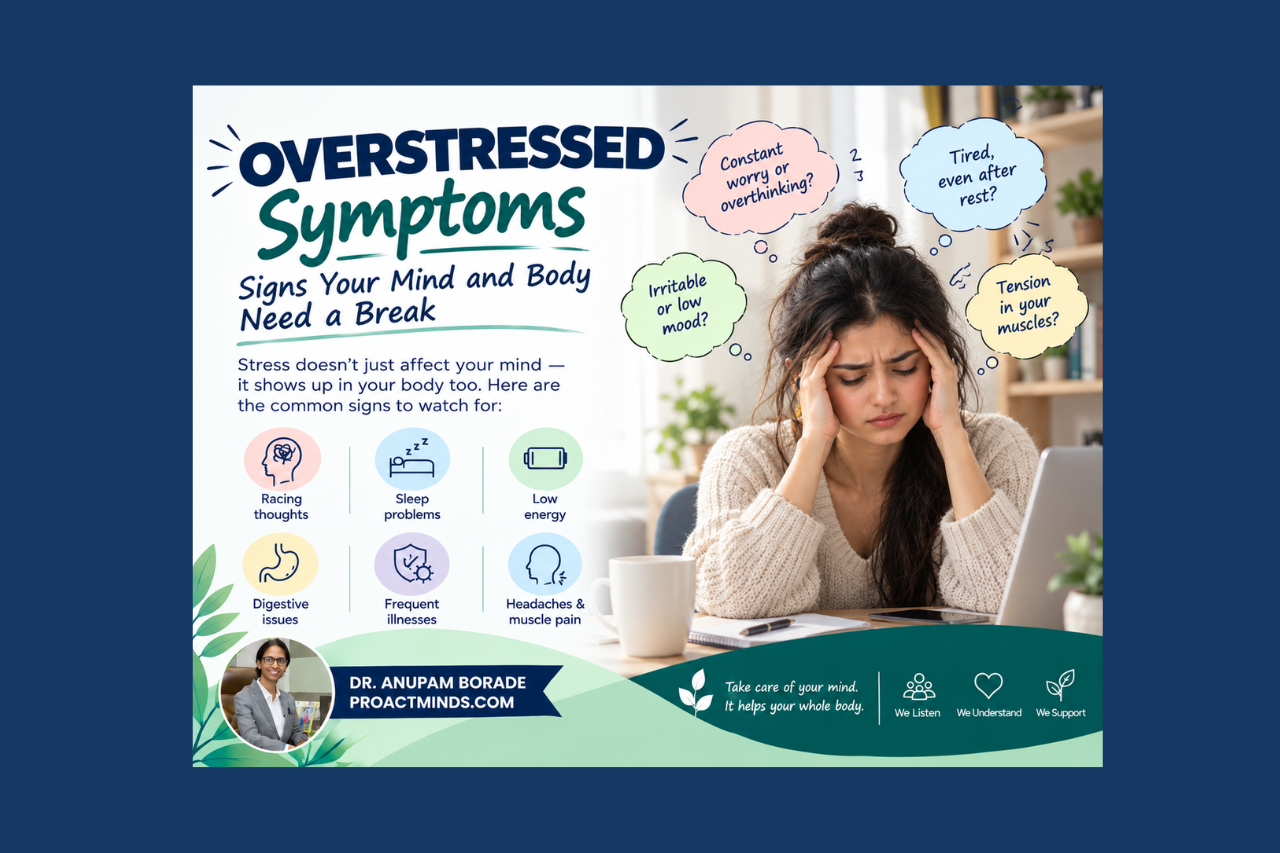
Overstressed symptoms can affect your body, emotions, thoughts, and everyday behaviour. They may develop gradually, making it difficult to recognise how much pressure you have been carrying.
Here are 10 signs that stress may be taking a toll on your well-being:
Constant tiredness, even after getting enough rest.
Frequent headaches or muscle tension.
Difficulty falling asleep or staying asleep.
Feeling irritated or frustrated over small things.
Trouble concentrating or remembering details.
Persistent worrying or racing thoughts.
Changes in appetite or eating habits.
Withdrawing from friends, family, or activities you usually enjoy.
Procrastinating because even simple tasks feel overwhelming.
Feeling restless, tense, or unable to relax during your free time.
Experiencing one or more of these signs does not automatically mean you are overstressed. However, if they persist or begin affecting your daily routine, it may be worth exploring what is contributing to them.
Physical Symptoms of Being Overstressed
Stress does not stay confined to your thoughts. It can affect how your body feels and functions, particularly when you rarely get time to rest.
Common physical symptoms include headaches, tight shoulders, muscle tension, stomach discomfort, changes in appetite, and disturbed sleep. You may also notice a faster heartbeat or feel physically drained after relatively ordinary activities.
These symptoms can have several causes, so avoid assuming that stress is responsible for everything you experience. Persistent or severe physical symptoms deserve appropriate medical attention.
Emotional Symptoms of Being Overstressed
When stress builds up, your emotional responses may become stronger or harder to manage. You might feel unusually impatient, anxious, frustrated, or overwhelmed by situations that would normally seem manageable.
You may also become more sensitive to criticism or feel like you are constantly falling behind, even when you are trying your best. Sometimes, you may not feel particularly sad or anxious but simply find yourself with very little emotional energy left.
Recognising these changes can help you understand when you need support, rest, or a more manageable routine.
Mental and Behavioural Symptoms of Stress
Prolonged stress can make it harder to focus, organise your thoughts, and make decisions. You might reread the same paragraph several times, forget small details, or struggle to decide which task to tackle first.
Your behaviour may change, too. You might avoid responsibilities, scroll on your phone to escape your thoughts, cancel plans, or keep yourself busy to avoid dealing with difficult feelings.
These responses are not signs of laziness or a lack of ability. They may indicate that you are struggling with more demands than you currently have the capacity to manage.
Also Know About: What is Stress Test
What Causes a Person to Become Overstressed?
There is rarely just one reason someone becomes overstressed. Sometimes, a major life event triggers it. At other times, several smaller pressures build up until even ordinary responsibilities begin to feel exhausting.
Understanding the source of your stress can help you identify what needs to change and where you may need additional support.
Work Pressure and Academic Responsibilities
Deadlines, examinations, demanding schedules, and the pressure to perform well can leave you feeling mentally exhausted. When you constantly measure your worth through productivity, taking a break may even make you feel guilty.
Over time, working or studying without enough recovery can make it harder to concentrate and stay motivated. Learning to prioritise tasks, set realistic expectations, and take regular breaks can help make these demands more manageable.
Family Problems and Relationship Stress
Disagreements with loved ones, communication difficulties, family expectations, and relationship uncertainty can create ongoing emotional pressure. Even when you are physically away from the situation, you may find yourself replaying conversations or worrying about what might happen next.
When personal concerns overlap with work or academic responsibilities, it can become difficult to switch off mentally. Talking to someone you trust and setting healthy boundaries can help you manage these pressures without carrying everything alone.
Financial Worries and Major Life Changes
Financial uncertainty, unexpected expenses, changing jobs, moving homes, or adjusting to a new stage of life can leave you feeling unsettled. These situations often involve decisions that cannot be resolved immediately, which may increase worry.
You might find yourself constantly thinking about what could go wrong or feeling pressure to figure everything out at once. Breaking larger concerns into smaller, practical steps can make them feel less overwhelming.
Lack of Sleep, Rest, and Personal Time
When your days are packed with responsibilities, sleep, relaxation, and activities you enjoy are often the first things to be sacrificed. You may tell yourself that you will rest once everything is finished, only to find that there is always another task waiting.
Without enough recovery time, everyday stress can become more difficult to handle. Making space for regular sleep, short breaks, movement, and enjoyable activities can help you feel better equipped to manage daily demands.
Can Being Overstressed Cause Fatigue?
Yes, stress can contribute to fatigue. When you are under pressure for long periods, your body may remain in a heightened state of alertness, while your mind continues processing worries even when you are trying to rest.
This can affect sleep quality, concentration, motivation, and energy levels. You might wake up feeling tired, struggle to get through the afternoon, or feel mentally exhausted after completing routine tasks.
Stress-related fatigue can also become part of a difficult cycle. You feel tired, everyday responsibilities become harder to manage, and the resulting pressure leaves you feeling even more drained.
A few habits may help you manage this cycle:
Maintain a consistent sleep schedule as far as possible.
Break demanding tasks into smaller, achievable steps.
Take short breaks between work or study sessions.
Make time for gentle physical activity, such as walking.
Talk to someone you trust instead of keeping every worry to yourself.
However, fatigue is not always caused by stress. If you feel persistently exhausted despite adequate rest, or your tiredness is severe or unexplained, consult a healthcare professional to explore other possible causes.
When Should You Seek Professional Help for Stress?
Stress is something most people experience, but you do not have to wait until you feel completely overwhelmed before seeking help. If your symptoms keep returning, become difficult to manage, or begin affecting your everyday life, professional support may help you understand what is happening.
Signs That Stress Is Affecting Your Daily Life
Consider seeking support if you notice that stress is interfering with your sleep, relationships, work, studies, or ability to enjoy everyday activities. You may feel constantly overwhelmed, struggle to manage ordinary responsibilities, or find it increasingly difficult to relax even when you have time to yourself.
It is also worth paying attention if you rely on unhealthy coping habits or feel that your usual ways of managing stress are no longer helping.
You do not need to experience every symptom on the list to deserve support. If something feels difficult to manage, that is reason enough to reach out.
How a Mental Health Counsellor Can Help You Manage Stress
A mental health counsellor can help you explore the situations, expectations, and thought patterns that contribute to your stress. Counselling provides a space to talk openly about your concerns without feeling judged or pressured to have everything figured out.
You can learn practical ways to manage overwhelming thoughts, set healthier boundaries, respond to difficult emotions, and develop coping strategies that suit your circumstances. Approaches such as cognitive behavioural therapy (CBT) may also help you identify unhelpful thinking patterns and respond to stress differently.
At Proact Minds, mental health support can help you better understand your experiences and work towards a healthier balance. Asking for help is not a sign that you cannot handle life. It is a way of taking your well-being seriously.
Frequently Asked Questions
Common overstressed symptoms include persistent tiredness, headaches, muscle tension, sleep difficulties, irritability, racing thoughts, trouble concentrating, and changes in appetite. Symptoms vary from person to person, and persistent concerns should be discussed with a healthcare professional.
Overstressed means feeling overwhelmed by ongoing pressure or responsibilities to the point that managing everyday demands becomes difficult. It can affect your physical health, emotions, concentration, and behaviour.
Yes, stress can contribute to fatigue by affecting sleep, increasing mental strain, and making it harder to relax. However, persistent tiredness can have other causes, so consider seeking medical advice if it continues despite adequate rest.
You can begin by maintaining a regular sleep schedule, taking breaks, engaging in gentle physical activity, practising relaxation techniques, and setting realistic expectations. Talking to someone you trust and reducing unnecessary commitments may also help.
Consider professional help when symptoms persist, interfere with daily activities, affect your relationships, or become difficult to manage independently. A healthcare professional or mental health counsellor can help you understand your symptoms and identify appropriate support.