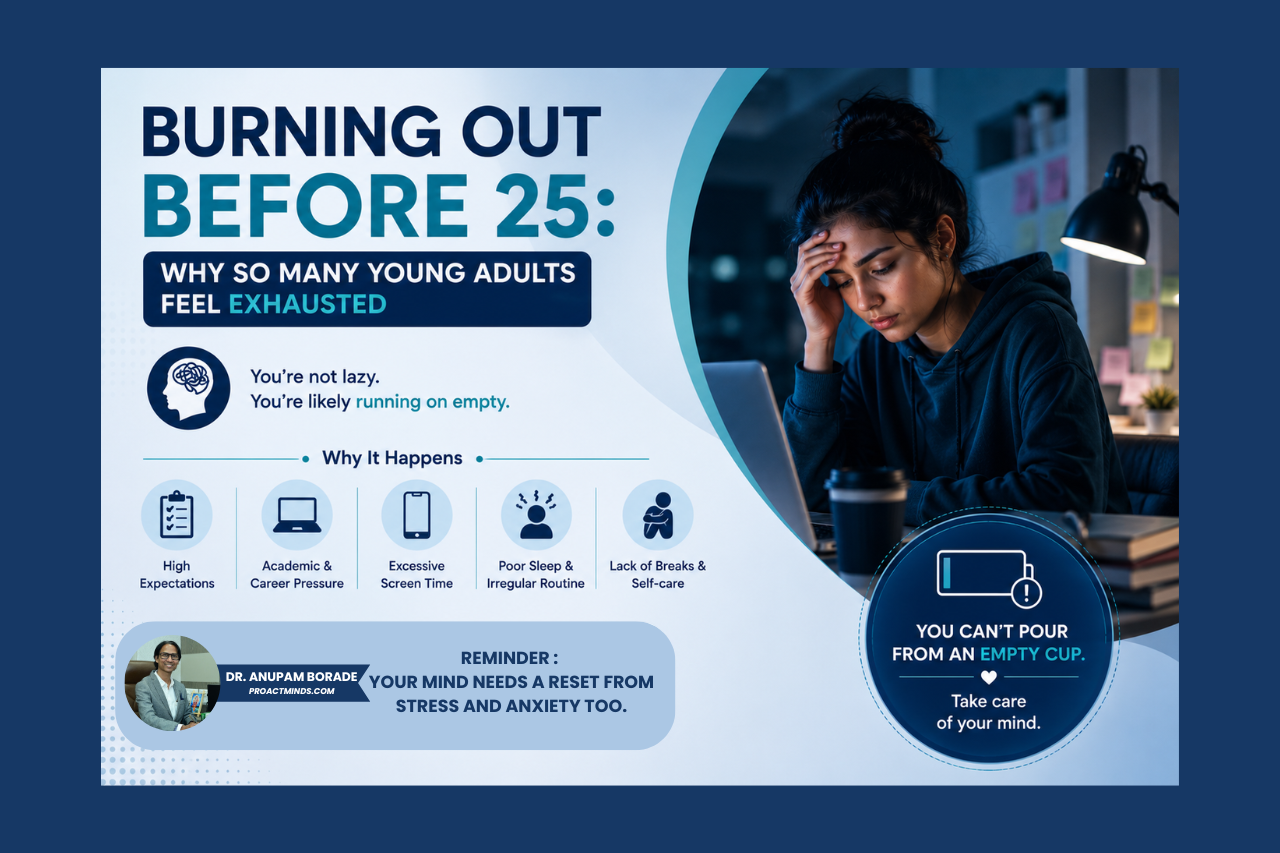
There was a time when your twenties were seen as the years to explore, experiment, make mistakes, and slowly figure out life. Today, that picture looks very different. Many young professionals feel like they need to secure a high-paying job, build a successful career, maintain an active social life, stay fit, travel, invest, and have their future planned before they even turn 25.
As a result, more people are burning out before they’ve even had the chance to enjoy the journey. Constant expectations, social comparisons, and increasing job pressure have created a generation that feels overwhelmed while trying to meet unrealistic standards. Understanding the burn out meaning can help people recognise when stress has become something more serious and when it’s time to seek support.
Why Are So Many People Burning Out?
Feeling tired after a busy week is normal. However, the burn out meaning goes far beyond ordinary tiredness. Burnout is a state of emotional, physical, and mental exhaustion caused by prolonged stress without enough time to recover.
Many young adults feel pressured to achieve multiple milestones within a short period. They are expected to graduate, secure a successful career, earn well, build relationships, improve their skills, and plan their future all at once.
Trying to meet these expectations continuously can leave people burning out emotionally and physically before they even reach their long-term goals.
The Pressure to Have Everything Figured Out
One of the biggest reasons behind burning out is the belief that life should already be completely sorted by your mid-twenties.
Many people compare themselves with classmates, colleagues, entrepreneurs, and influencers who seem to have achieved success at an early age. In reality, everyone follows a different path, but comparison often creates unnecessary pressure.
Social Media Creates Unrealistic Expectations
Every scroll introduces another achievement.
Someone has launched a business.
Someone bought a new home.
Someone received a promotion.
Someone is travelling the world.
While these moments are real, they rarely show the setbacks, failures, financial worries, or emotional struggles behind the scenes. Constant comparison leaves many people questioning their own progress and contributes to burning out emotionally.
Success Starts Feeling Like a Race
Career growth should be personal, but many people begin treating it like a competition.
Questions such as:
- “Am I successful enough?”
- “Why is everyone moving ahead except me?”
- “Should I have achieved more by now?”
can slowly damage confidence and increase stress.
When success becomes a race instead of a journey, the risk of burn out increases significantly.
Fear of Falling Behind
Many professionals continue saying yes to additional responsibilities because they’re afraid opportunities may disappear.
Instead of slowing down, they keep pushing themselves through exhaustion. Over time, this constant pressure becomes emotionally draining.
How Job Pressure Contributes to Burning Out
Today’s workplaces offer exciting opportunities, but they also bring increasing job pressure.
Many employees are expected to perform consistently, adapt quickly, and continuously improve their skills while balancing personal responsibilities.
Always Being Available
Technology has blurred the line between work and personal life.
Emails, work chats, and notifications continue long after office hours, making it difficult to mentally disconnect.
Constant Pressure to Perform
Many professionals feel they must constantly prove themselves by exceeding expectations.
Instead of celebrating achievements, they immediately move on to the next goal, leaving little time to recover.
Job Insecurity Adds More Stress
Economic uncertainty, competitive hiring, and changing workplaces have increased job pressure for many young professionals.
The fear of losing opportunities often encourages people to overwork themselves, increasing the chances of burning out.
Signs You’re Burning Out
Burnout rarely happens overnight.
Instead, it develops gradually until everyday responsibilities begin feeling overwhelming.
Recognising these warning signs early can help prevent long-term emotional difficulties.
Constant Exhaustion
Even after getting enough sleep, you continue feeling mentally and physically tired.
If you often find yourself thinking, “I am burned out,” it may be more than simple fatigue.
Motivation Has Disappeared
Activities that once felt exciting now seem exhausting.
Instead of feeling motivated, you’re simply trying to get through the day.
Emotional Detachment
Many people experiencing burn out begin feeling emotionally numb.
Rather than enjoying work or spending time with loved ones, they feel disconnected from everything around them.
Everyday Tasks Feel Difficult
Replying to emails, attending meetings, or completing routine work suddenly feels mentally exhausting.
These are common signs of burning out and shouldn’t be ignored.
Why Ignoring Burnout Can Make Things Worse
Many people believe they’ll recover after a weekend off or a short holiday.
Unfortunately, burnout usually requires more than temporary rest.
Ignoring prolonged emotional exhaustion may contribute to:
- Chronic stress
- Anxiety
- Depression
- Poor sleep
- Difficulty concentrating
- Reduced productivity
- Physical fatigue
- Relationship conflicts
The longer someone continues burning out, the more difficult recovery can become.
How to Prevent Burning Out
While stress is sometimes unavoidable, burnout doesn’t have to become part of everyday life.
Small, consistent habits can help protect emotional well-being while supporting long-term success.
Accept That You Don’t Need Every Answer Today
Many people feel pressured to have their careers, finances, and future completely planned before turning 25.
The reality is that growth takes time.
Giving yourself permission to learn and evolve reduces unnecessary stress and lowers the risk of burn out.
Reduce Comparison
Everyone’s journey is different.
Instead of measuring your life against social media highlights, focus on your own progress and celebrate meaningful achievements.
Set Healthy Work Boundaries
Managing job pressure starts with creating boundaries.
Take breaks, avoid checking work messages after office hours whenever possible, and make time for activities that help you recharge.
Make Rest a Priority
Rest isn’t laziness.
Quality sleep, regular exercise, hobbies, and spending time with loved ones all improve resilience and reduce the likelihood of burning out.
When Should You Seek Professional Help?
Feeling stressed before an important deadline or interview is completely normal.
However, if you repeatedly think, “I am burned out,” or notice emotional exhaustion lasting for weeks, professional support can help.
Consider speaking with a mental health professional if you experience:
- Constant fatigue despite getting enough sleep
- Frequent anxiety
- Difficulty concentrating
- Emotional numbness
- Poor sleep
- Loss of motivation
- Feeling overwhelmed by everyday responsibilities
Seeking support early can prevent burnout from affecting multiple areas of your life.
How Therapy Can Help with Burnout
Many people believe they simply need a holiday to recover.
However, burnout often develops because of deeper emotional patterns, unrealistic expectations, perfectionism, or prolonged job pressure.
Understanding the Root Cause
Therapy helps individuals understand why they’re burning out and identify the thoughts or situations contributing to ongoing stress.
Building Healthier Coping Strategies
Mental health professionals teach practical techniques to manage stress, improve emotional resilience, and maintain healthier daily routines.
Creating a Healthier Relationship with Success
Therapy helps redefine success so it includes emotional well-being, personal fulfilment, and healthy work-life balance instead of constant exhaustion.
Conclusion
Understanding the true burn out meaning is the first step toward recognising when stress has become unhealthy. While ambition and hard work are important, constantly burning out should never become the price of success.
If increasing job pressure has left you feeling emotionally exhausted or frequently thinking, “I am burned out,” don’t ignore those signs. Seeking help early can make a meaningful difference.
At Proact Minds, our experienced psychiatrists and mental health professionals provide compassionate support for individuals dealing with burnout, workplace stress, anxiety, and emotional exhaustion. With the right guidance, you can achieve your goals while protecting your mental well-being.
Frequently Asked Questions
The burn out meaning refers to a state of emotional, physical, and mental exhaustion caused by prolonged stress, often resulting from excessive work or ongoing pressure.
Many young adults experience burning out because of increasing expectations, social comparison, financial concerns, and continuous job pressure.
Excessive job pressure can lead to chronic stress, anxiety, poor sleep, emotional exhaustion, and reduced motivation, increasing the risk of burnout.
If you're thinking, "I am burned out," start by prioritising rest, setting healthy boundaries, reducing unnecessary stress, and speaking with a mental health professional if symptoms continue.
Yes. With professional support, healthy coping strategies, lifestyle changes, and stress management techniques, many people recover from burn out and regain a healthier balance in their lives.