You hear a notification. You check it.
Nothing important. You put your phone down.
Two minutes later, another notification appears. You check again.
Sounds familiar?
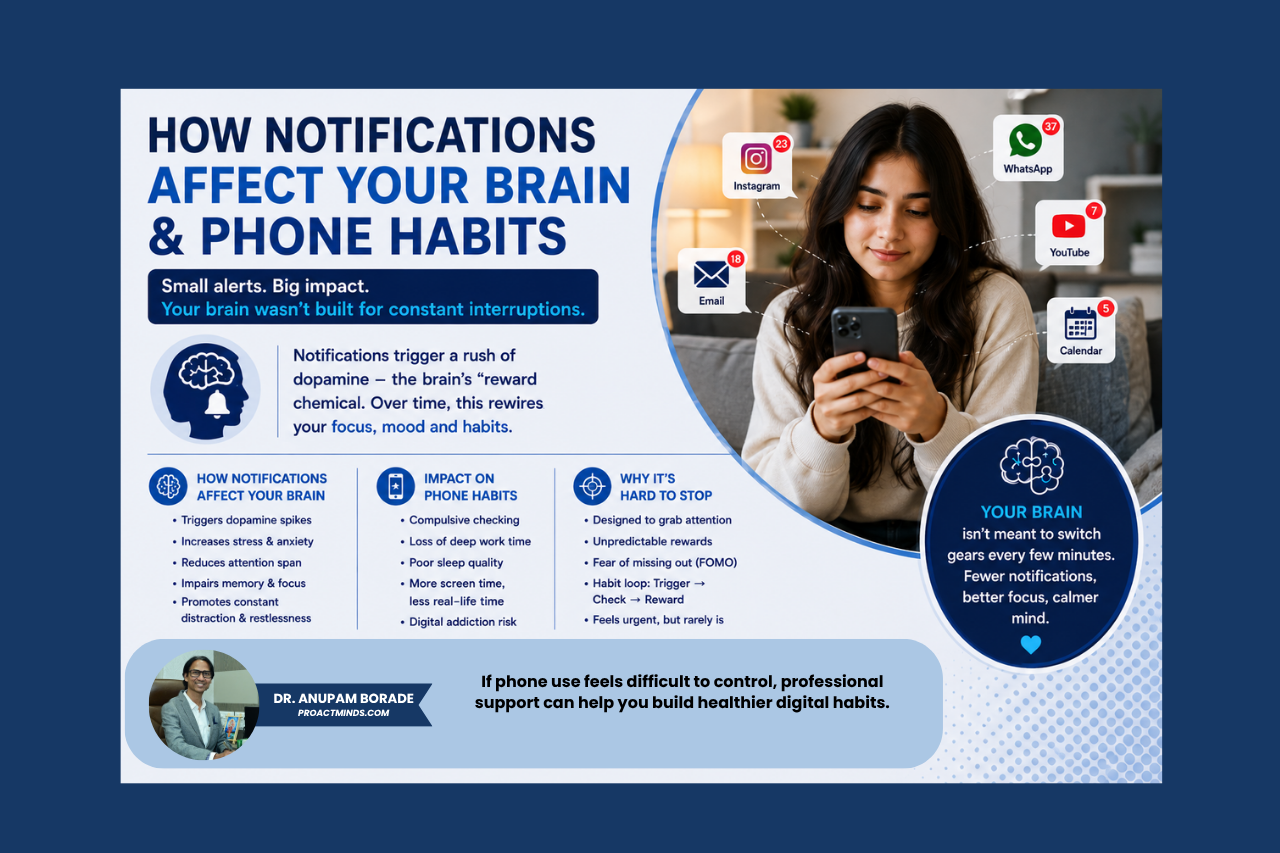
Notifications are designed to grab your attention, and when they keep appearing throughout the day, your brain can get used to constantly switching between tasks. Over time, this can affect concentration, stress levels, sleep, and even how comfortable you feel when your phone is out of reach.
Why Are Notifications So Hard to Ignore?
A notification might take only a few seconds to check, but the interruption itself can pull your attention away from whatever you were doing.
The problem is not necessarily one message. It is the constant expectation that another one could appear.
Your Brain Starts Expecting the Next Ping
Every notification creates a small moment of anticipation. Is it a message? A like? An email? Something important?
When this happens repeatedly, your brain can start checking your phone almost automatically. Eventually, you may reach for it before you have even consciously decided to.
Not Every Notification Is Important, But Your Brain Does Not Know That
Your phone does not understand that you are studying, working, eating or trying to sleep.
A vibration or sound simply signals that something new has happened. Your brain then has to decide whether it deserves attention, which can repeatedly interrupt your focus.
How Do Constant Notifications Affect Your Brain?
The human brain is not designed to focus deeply while constantly switching between unrelated pieces of information.
When notifications repeatedly interrupt you, your attention gets pulled away from the present task. Even after checking your phone, it can take time to fully return to what you were doing.
They Can Make Concentration Harder
Imagine trying to read a chapter while your phone keeps lighting up beside you. Even if you ignore the notifications, part of your attention may still be wondering what you are missing.
This constant background awareness can make it harder to settle into focused work, studying, or reading.
They Can Increase Mental Overload
Messages, emails, social media updates, and app alerts can create a steady stream of information for your brain to process.
When there is always something new demanding attention, you may end the day feeling mentally tired even if you have not done anything particularly demanding.
They Can Keep Your Brain in “Check Mode”
Have you ever unlocked your phone without actually knowing why?
Constant notifications can contribute to a habit of checking. Eventually, you may not even need a notification to reach for your phone. Boredom, silence, or a moment of waiting can become enough.
What Is Phone Addiction?
Phone addiction refers to a pattern of excessive or difficult-to-control phone use that begins interfering with everyday life.
It is not simply about spending a certain number of hours on your phone. What matters is whether you feel unable to cut down, frequently check your device without intending to, or continue using it despite negative effects on sleep, work, studies, or relationships.
When Checking Your Phone Becomes Automatic
At first, checking your phone may be a conscious decision. Over time, it can become a habit.
You might unlock your phone while waiting for a lift, during a conversation, while watching television, or even in the middle of a task. The behaviour becomes automatic rather than intentional.
Why Boredom Can Trigger Phone Use
Silence can feel uncomfortable when you are used to constant stimulation.
A few seconds of waiting can suddenly feel like an opportunity to scroll, check messages or open an app. Your phone becomes an easy escape from boredom, even when you were not actually looking for anything.
Can Notifications Contribute to Phone Addiction?
Notifications can reinforce phone-checking habits because they provide a reason to pick up your device.
You receive an alert, check it, and discover something interesting. That small moment of novelty can encourage you to check again later, even when there is no notification waiting.
The Notification-Checking Cycle
The cycle can look surprisingly simple:
Notification → check phone → discover something interesting → feel rewarded → check again later.
The more often this happens, the more automatic the behaviour can become. Eventually, you may start checking your phone even without a notification.
Why “Just One Check” Can Become Twenty
You may open your phone to reply to one message and then notice an Instagram notification. Then you check WhatsApp. Then an email. Then a video appears.
What began as a ten-second task can turn into twenty minutes of scrolling without you even realising how you got there.
How Does Phone Use Affect Sleep?
Your phone does not need to be physically in your hand to affect your bedtime routine.
If you are constantly checking messages, watching videos, or waiting for notifications, your mind may remain engaged when it should be winding down.
Notifications Can Interrupt Your Night
A message arriving late at night can instantly pull your attention back towards your phone. Even when you do not fully wake up, notifications can encourage the habit of keeping your phone within reach and checking it whenever something happens.
Scrolling Can Push Bedtime Further Away
“I will scroll for five minutes” can easily become half an hour.
The problem is not just the amount of time spent on your phone. Delaying bedtime repeatedly can leave you with less time for sleep and make your mornings harder.
How to Stop Phone Addiction Without Throwing Your Phone Away
Learning how to stop phone addiction does not require deleting every app or becoming completely disconnected.
The goal is to make your phone work for you rather than allowing every notification, update, and urge to check it to control your attention.
Turn Off Non-Essential Notifications
Start with the easiest change: reduce the number of things that are allowed to interrupt you.
You probably do not need an alert every time an app has something new. Keep notifications for genuinely important communication and silence the rest.
Keep Your Phone Out of Reach
If your phone is sitting next to your laptop, studying table, or pillow, checking it becomes effortless.
Put it across the room, inside a bag, or somewhere you cannot automatically reach for it. A little physical distance can create enough friction to break the habit.
Create Phone-Free Moments
You do not need to stay offline all day. Start with specific moments.
Try keeping your phone away during meals, while talking to someone, during focused work, and for the first few minutes after waking up. These small boundaries can make your phone feel less central to your day.
Replace the Habit, Not Just the Phone
If you simply remove your phone without replacing the behaviour, boredom may send you straight back to it.
Keep a book nearby, go for a short walk, listen to music, or simply allow yourself to sit without stimulation. Your brain can slowly become comfortable with having nothing to check.
What Are the Signs Your Phone Use May Be Becoming a Problem?
Using your phone frequently does not automatically mean you have a phone addiction.
However, certain patterns may suggest that your relationship with your device is becoming difficult to control.
You Check Your Phone Without Realising It
You unlock your phone and then realise you do not even remember why you picked it up.
If this happens repeatedly throughout the day, it may be a sign that checking has become an automatic habit rather than a conscious choice.
You Feel Uncomfortable Without Your Phone
Do you feel strangely anxious when your phone is not nearby?
Feeling uncomfortable without your device, constantly checking whether you have missed something, or becoming restless when you cannot access it can indicate that your phone has become an important source of reassurance or stimulation.
Your Phone Starts Interfering With Everyday Life
If phone use regularly affects your sleep, concentration, relationships, studies, or work, it may be time to reconsider your habits.
The goal is not to feel guilty about using your phone. It is to notice whether the habit is still serving you.
How to Build a Healthier Relationship With Your Phone
You do not need to hate technology to have healthier digital habits.
Your phone can be useful, entertaining, and important. The difference lies in whether you are choosing when to use it or constantly responding to whatever appears on the screen.
Give Yourself Time Without Notifications
Try creating periods during the day when your phone is intentionally quiet.
Even thirty minutes without constant notifications can give your attention a chance to settle. You may be surprised by how much easier it feels to focus when nothing is asking for your attention.
Make Your Home Screen Less Tempting
The apps you see immediately are often the ones you open without thinking.
Move distracting apps away from your home screen, remove unnecessary widgets and consider using a simpler display. Making the first screen boring can be surprisingly effective.
Stop Measuring Your Day by Your Screen Time Alone
Screen time can be useful information, but the number itself does not tell the whole story.
A video call with a friend, studying online, and mindlessly scrolling for an hour are very different experiences. Pay attention to how you use your phone and how you feel afterwards, not just the total number of minutes.
When Should You Seek Professional Support?
Sometimes excessive phone use is not just about poor habits. It may become a way of coping with stress, loneliness, anxiety or emotional discomfort.
If you repeatedly use your phone to escape difficult feelings and find it hard to change the pattern despite trying, talking to a mental health professional may help.
How ProactMinds Can Help
Changing your relationship with your phone is not about becoming perfectly disciplined. It is about understanding your habits and creating healthier ways to respond to your attention, emotions, and everyday stress.
At ProactMinds, professional support can help individuals explore concerns related to anxiety, stress, compulsive behaviours and emotional wellbeing.
Frequently Asked Questions
Constant notifications can repeatedly interrupt attention and encourage frequent phone-checking. Over time, this may make it harder to maintain focus and can contribute to mental overload and habitual checking.
Phone addiction refers to excessive or difficult-to-control phone use that begins interfering with everyday life. It may involve constantly checking the device, feeling uncomfortable without it, or continuing to use it despite negative effects on sleep, work, or relationships.
Learning how to stop phone addiction can begin with turning off unnecessary notifications, creating phone-free periods, keeping your device out of reach, and replacing scrolling with other activities. If the habit feels difficult to control, professional support may also help.
Frequent checking can become an automatic habit reinforced by notifications, boredom, curiosity, or the expectation that something interesting might appear. Once the behaviour becomes habitual, you may check your phone even when there is nothing new.
Yes. Every notification can interrupt your attention and encourage you to switch tasks. Repeated interruptions can make it harder to maintain deep focus, particularly when you are studying, working, or trying to complete something that requires sustained attention.