If autism appears in a family, it is natural to wonder whether genetics are behind it. You may have questions about whether autism can be inherited, whether a parent can pass it to their child, or whether someone can be autistic without any family history.
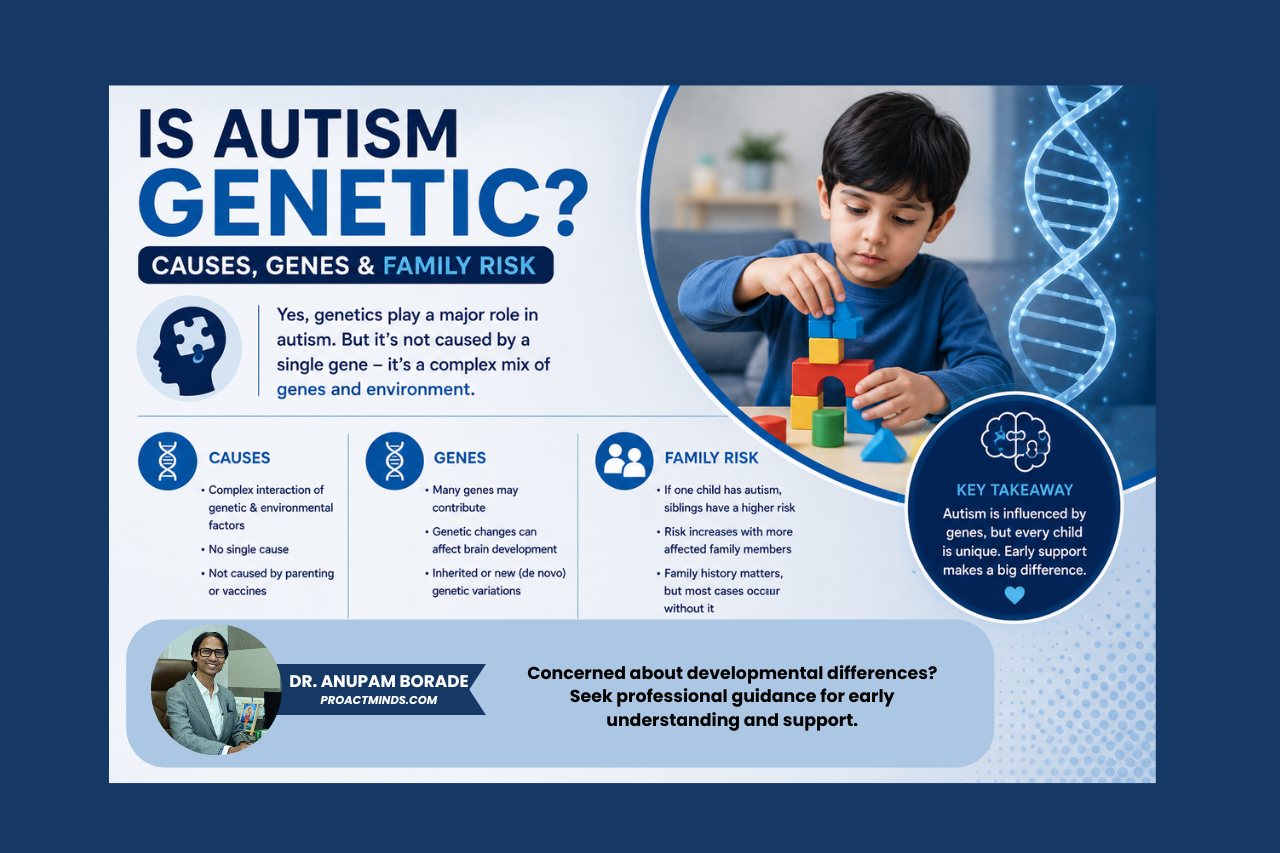
So, is autism genetic? Research shows that genetics play a major role in autism. However, autism does not have one single genetic cause. A combination of genetic and developmental factors can influence whether someone develops autism.
What Are the Genetic Causes of Autism?
There is no single “autism gene.” Instead, researchers have identified many genetic variations that may influence brain development and increase the likelihood of autism.
Some genetic changes can be inherited from parents, while others may occur spontaneously. This makes autism genetics complex and helps explain why autistic people can have very different traits and experiences.
Is Autism Inherited From the Mother or Father?
Autism-related genetic factors can come from either side of the family. It is not accurate to say that autism is inherited specifically from the mother or specifically from the father.
Can Autism Be Inherited From Either Parent?
Yes. Genetic variations associated with autism can be inherited from either parent. In some cases, a child may inherit several genetic differences that together increase the likelihood of autism.
However, inheriting these variations does not necessarily mean that a child will be autistic.
Does Having an Autistic Parent Increase the Chance of Autism?
Having an autistic parent can increase the likelihood of autism because genetic factors contribute significantly to autism risk.
That does not mean every child of an autistic parent will be autistic. Genetics influence probability rather than determining an unavoidable outcome.
Can Autism Occur Without a Family History?
Yes. Autism can occur even when there is no known family history.
Some genetic changes associated with autism may arise spontaneously rather than being inherited. Also, family members may have genetic factors without showing noticeable autistic traits.
What Other Factors May Influence Autism?
Genetics are an important part of the picture, but autism is not explained by genes alone. Researchers continue to study how genetic and developmental influences work together.
Genetics and Development
Genes influence how the brain develops and functions, particularly during early development. Differences in these processes may contribute to the characteristics associated with autism.
This is one reason autism can present differently from one person to another.
Environmental and Prenatal Factors
Researchers have also studied certain prenatal and early developmental factors in relation to autism. These may include some pregnancy-related or birth-related factors.
However, having a particular risk factor does not mean that a child will definitely develop autism. Autism has multiple contributing influences rather than one simple cause.
Why Autism Has Multiple Contributing Factors
Autism is a complex neurodevelopmental condition. Different combinations of genetic variations and developmental influences can contribute to how autism develops.
This complexity is why researchers do not describe autism as being caused by one gene, one parenting style, or one specific event.
Can Genetic Testing Diagnose Autism?
Genetic testing can provide useful information in some situations, but it is important to understand what it can and cannot tell you.
A genetic test may identify certain genetic changes associated with autism or other developmental conditions, but it cannot simply confirm whether someone is autistic.
What Is Genetic Testing?
Genetic testing involves examining a person’s DNA for specific genetic changes or variations.
Depending on the situation, healthcare professionals may recommend different types of genetic testing to investigate developmental or medical concerns and understand whether there may be an underlying genetic condition.
Can a Genetic Test Confirm Autism?
No. There is currently no single genetic test that can confirm autism.
A person can be autistic without having an identifiable genetic change on a test, while someone can have a genetic variation associated with autism without being autistic. Genetic testing and autism diagnosis therefore serve different purposes.
When Might Genetic Testing Be Considered?
Genetic testing may sometimes be considered when an autistic person has additional developmental, intellectual, neurological, or physical features that suggest a possible genetic condition.
A healthcare professional can determine whether testing is appropriate based on the individual’s history and symptoms.
How Is Autism Diagnosed?
Understanding is autism a genetic disorder and understanding how autism is diagnosed are two different questions. Autism diagnosis is based primarily on a person’s development, behaviour, and communication patterns rather than a genetic test.
What Does an Autism Assessment Involve?
An autism assessment typically looks at communication, social interaction, behaviour, sensory experiences and patterns of interests or activities.
For children, professionals may also gather information from parents, caregivers and teachers. For adults, developmental history and current experiences are important parts of the assessment.
Why Family History Can Be Important
Family history can provide useful information during an autism assessment because autism and certain related developmental traits can run in families.
A professional may ask whether other family members have been diagnosed with autism or have experienced similar developmental or behavioural characteristics.
Why Genetic Testing and Autism Assessment Are Different
Genetic testing looks for changes in DNA, while an autism assessment looks at how a person experiences and interacts with the world.
A genetic test cannot replace a comprehensive autism assessment. The two may sometimes complement each other, but they answer different questions.
When Should You Consider an Autism Assessment?
If you or your child shows persistent differences in communication, social interaction, behaviour, or sensory experiences, an autism assessment may help provide clarity.
Seeking an assessment is not about forcing a label. It can be about understanding someone’s needs and finding appropriate support.
Signs That May Lead Someone to Seek an Assessment
Signs may include difficulty with social communication, differences in understanding social cues, repetitive behaviours, strong preferences for routines or unusual sensory sensitivities.
In children, parents may also notice differences in language development, play or interaction with others. In adults, longstanding social difficulties or sensory experiences may become more noticeable in work or relationship settings.
Autism Assessment for Children and Adults
Autism can be assessed at different ages. For children, developmental history and observations of behaviour are especially important.
Adults may also seek an assessment after recognising lifelong patterns that were previously misunderstood or attributed to personality, shyness or anxiety.
What Happens After an Assessment?
After an assessment, a professional can explain the findings and discuss whether the person’s experiences are consistent with autism.
If autism is identified, the next step is not simply the diagnosis itself. Understanding individual strengths, challenges and support needs can be equally important.
Understanding Autism and Genetics Without Blame
Questions about genetics can sometimes lead to guilt or blame, particularly for parents. It is important to remember that autism is not the result of something a parent did wrong.
Understanding genetics can instead help families replace blame with better information and appropriate support.
Autism Is Not Caused by Poor Parenting
Autism is not caused by poor parenting or a lack of affection. It is a neurodevelopmental condition with complex biological and genetic influences.
Parents should not blame themselves for their child’s autism. Focusing on understanding the child’s needs is much more useful than searching for someone to blame.
Why Understanding Genetics Can Be Helpful
Learning about the genetic side of autism can help families understand why autism may appear across generations or occur even without an obvious family history.
It can also help healthcare professionals decide whether further genetic evaluation may be useful in particular cases.
Avoiding Myths About Autism and Genetics
Autism genetics can easily become surrounded by oversimplified claims. There is no single gene that explains every case of autism, and having a genetic risk does not guarantee that someone will be autistic.
Reliable information and professional guidance are more useful than trying to find one simple explanation for a complex condition.
How ProactMinds Can Help With Autism Assessment
If you are wondering whether certain developmental or behavioural patterns may be related to autism, professional guidance can help you move beyond online checklists and assumptions.
At ProactMinds, an assessment can help provide a clearer understanding of an individual’s experiences and support needs.
Professional Autism Assessment and Support
ProactMinds provides professional mental health support for individuals and families seeking greater clarity about autism-related concerns.
An assessment can help explore developmental history, communication patterns, social experiences, and other relevant characteristics in a structured way.
What to Expect During an Assessment
During an assessment, you may be asked about developmental history, communication, social interactions, behaviour and everyday experiences.
For children, information from parents or caregivers can be particularly valuable. For adults, discussing lifelong patterns and current challenges can help build a clearer picture.
When to Seek Professional Guidance
Consider professional guidance when you or your child is experiencing persistent differences in communication, social interaction, routines, behaviour or sensory experiences that affect everyday life.
You do not need to wait for difficulties to become overwhelming before seeking an assessment. Early understanding can make it easier to identify appropriate support.
Frequently Asked Questions
Yes. Genetics play a significant role in autism, but there is no single gene responsible for the condition. Multiple genetic and developmental factors can contribute to autism.
Autism has a strong genetic component, but describing it simply as a genetic disorder can be misleading. Autism is a neurodevelopmental condition influenced by many genetic factors along with developmental influences.
Autism-related genetic factors can be inherited from either parent. However, inheriting certain genetic variations does not guarantee that a child will be autistic.
Yes. Autism can occur without a known family history. Some genetic changes may occur spontaneously, and genetic factors may also be present in a family without anyone having received an autism diagnosis.
No. Genetic testing cannot currently diagnose autism by itself. Autism is diagnosed through a comprehensive assessment of developmental history, communication, behaviour and social interaction.