“Sleep is for the weak.”
“You can rest when you succeed.”
“If you’re not working, you’re falling behind.”
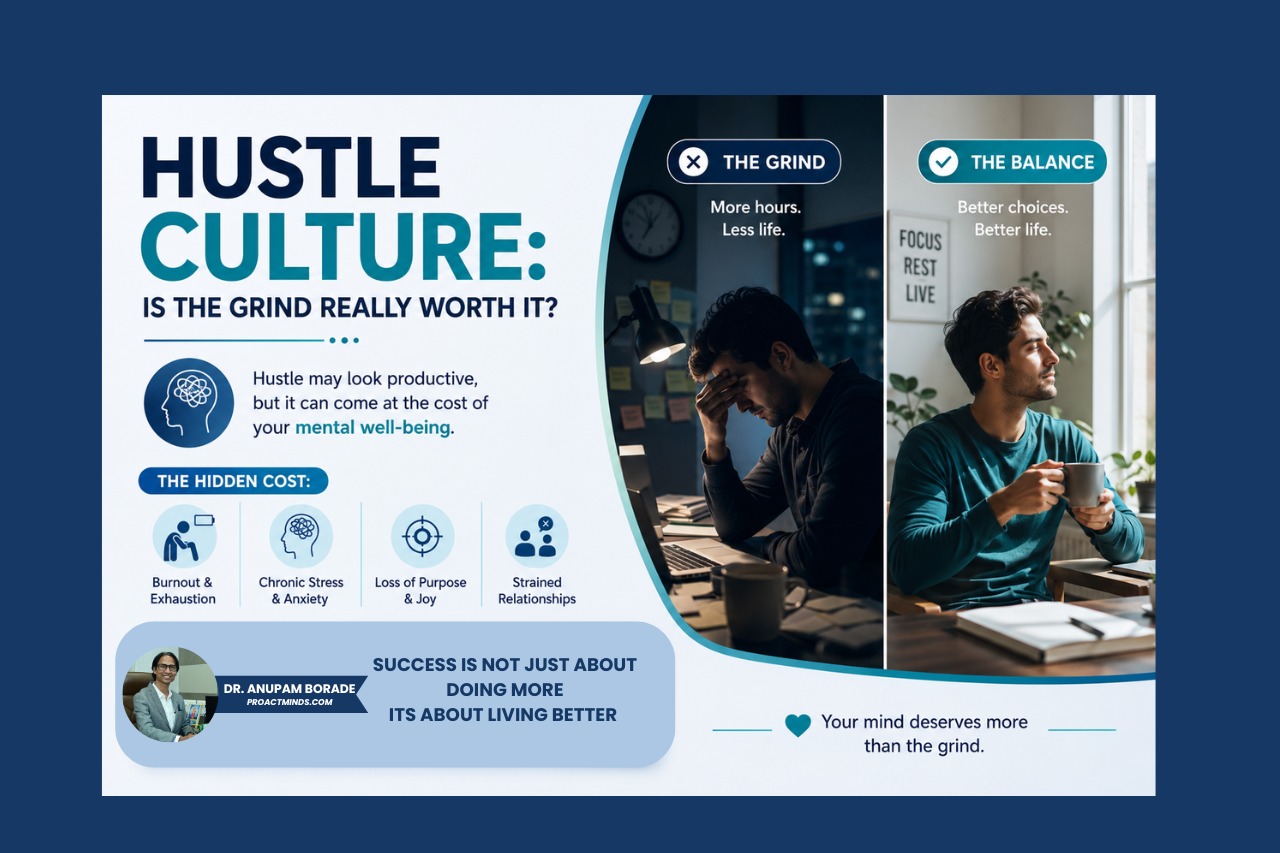
These phrases have become so common that many people now see them as motivation. Working long hours, skipping breaks, and constantly staying busy are often celebrated as signs of ambition. But behind this endless drive for productivity lies a growing concern that’s often overlooked, our mental well-being.
Hustle culture has become deeply embedded in modern workplaces and social media. While working hard and pursuing goals are valuable, constantly pushing yourself without enough rest can eventually lead to stress, burnout, and emotional exhaustion. Understanding what is hustle culture and recognising when it becomes unhealthy is essential for maintaining both professional success and personal well-being.
What Is Hustle Culture?
Many people have heard the term, but few stop to ask, what is hustle culture?
Simply put, hustle culture meaning refers to the belief that constant work, endless productivity, and sacrificing personal time are necessary to achieve success. It promotes the idea that being busy all the time is something to admire.
Initially, this mindset may feel motivating. However, problems arise when people begin ignoring their physical and emotional needs in the pursuit of achievement. Over time, many realise that hustle culture is toxic because it encourages overworking while making rest feel like failure.
When Healthy Ambition Turns Into Hustle Culture
Working towards your goals is important. The problem begins when work becomes your entire identity and your self-worth depends only on productivity.
Many people start by putting in extra effort during important projects or career milestones. Eventually, those extra hours become the expectation rather than the exception, making hustle culture feel like the only way to succeed.
You Feel Guilty for Taking Breaks
One of the biggest signs of hustle culture is feeling guilty whenever you’re not being productive.
Even during weekends or vacations, your mind keeps thinking about work, deadlines, or unfinished tasks. Instead of relaxing, you feel pressured to stay connected.
Your Work Never Feels “Enough”
No matter how much you accomplish, there’s always another target waiting.
People influenced by hustle culture often believe they must constantly achieve more to prove their value. Promotions or successful projects provide only temporary satisfaction before the next challenge appears.
Personal Life Starts Taking a Back Seat
Missing family dinners, cancelling plans with friends, or skipping hobbies may initially seem like small sacrifices.
However, when work consistently replaces relationships and self-care, emotional exhaustion begins to build, showing why hustle culture is toxic for long-term well-being.
How Hustle Culture Affects Mental Health
Many people admire those who constantly stay busy, but very few talk about the emotional cost that comes with it.
When your brain is continuously processing deadlines, responsibilities, and pressure to perform, it remains in a prolonged state of stress. Over time, hustle culture can affect multiple areas of mental health.
Increased Stress and Anxiety
Constant pressure to perform creates a feeling that you’re always running out of time. Even after completing one task, your mind immediately shifts to the next one, making it difficult to truly relax.
Burnout Becomes Inevitable
Burnout doesn’t happen overnight.
It develops after weeks or months of emotional exhaustion, excessive workload, and insufficient recovery. This is one of the biggest reasons experts believe hustle culture is toxic when taken to extremes.
Sleep Quality Begins to Suffer
Late-night work, checking emails before bed, or constantly thinking about deadlines affects sleep quality.
Without adequate rest, maintaining good mental health becomes increasingly difficult, regardless of how successful you appear professionally.
Why Hustle Culture Is Toxic in Many Workplaces
While personal habits contribute to burnout, workplace expectations also play a significant role.
Many organisations unintentionally reinforce hustle culture by rewarding employees who work late, skip breaks, or remain available after office hours.
Unrealistic Expectations
Employees are expected to be available almost all the time.
Messages arrive during weekends, holidays, and late evenings, making it difficult to disconnect and recharge.
Productivity Becomes More Important Than Well-Being
In many workplaces, achievements receive more recognition than employee well-being.
People hesitate to ask for support because they worry about appearing less committed, even when they’re struggling.
Comparing Yourself to Others
Social media has amplified hustle culture by constantly showcasing career achievements and success stories.
However, these highlights rarely show the stress, anxiety, or burnout happening behind the scenes.
How to Build a Healthy Career Without Following Hustle Culture
Escaping hustle culture doesn’t mean giving up on your ambitions. It means pursuing your goals in a way that supports both success and well-being.
Redefine Success
Success shouldn’t be measured only by promotions or the number of hours worked.
A fulfilling career also includes good health, meaningful relationships, personal growth, and time to recharge.
Set Healthy Boundaries
Avoid checking work emails after office hours whenever possible.
Take regular breaks, use your leave days, and create dedicated personal time. Healthy boundaries improve productivity while protecting emotional well-being.
Make Rest a Priority
Rest is not laziness.
Quality sleep, exercise, hobbies, and spending time with loved ones improve concentration, creativity, and resilience. These habits make long-term success more sustainable.
Also Read About: Exercise for Mental Health
Stop Comparing Your Journey
Everyone’s career develops differently. Instead of comparing yourself to others online, focus on your own progress and celebrate meaningful milestones along the way.
Signs That Hustle Culture Is Affecting You
Many people don’t realise that hustle culture has become unhealthy until emotional exhaustion begins affecting daily life.
You may need to reassess your work habits if you notice:
Constant Exhaustion
Even after resting, you continue to feel mentally and physically drained.
Work Is Always on Your Mind
Your thoughts constantly revolve around deadlines, meetings, or unfinished tasks, making it difficult to relax.
Relationships Are Being Neglected
Friends and family begin noticing that you’re always working or unavailable.
You No Longer Enjoy Your Work
Instead of feeling motivated, you feel emotionally detached and exhausted.
These signs may indicate that hustle culture is toxic for your current lifestyle and that changes are needed.
How Therapy Can Help You Break Free from Hustle Culture
Many people believe they simply need to “work less” to overcome burnout. However, the issue often runs much deeper.
For some individuals, overworking is connected to perfectionism, fear of failure, financial pressure, or self-worth.
Understanding the Root Cause
Therapy helps individuals recognise why they constantly feel the need to stay productive and where these beliefs originated.
Developing Healthier Coping Strategies
Mental health professionals help replace unhealthy work patterns with practical strategies that reduce stress while supporting long-term success.
Creating Better Work-Life Balance
Counselling helps individuals set boundaries, manage workplace stress, improve emotional resilience, and build healthier routines without sacrificing their ambitions.
Conclusion
Understanding what is hustle culture is the first step toward creating a healthier relationship with work. While ambition and dedication are valuable, they shouldn’t come at the expense of your emotional well-being.
If you’ve started noticing signs that hustle culture is toxic for your daily life, it’s important to remember that success doesn’t require constant exhaustion. Building a balanced lifestyle allows you to stay productive while protecting your mental health.
At Proact Minds, our experienced psychiatrists provide compassionate, support for individuals dealing with workplace stress, burnout, anxiety, and emotional exhaustion. With the right guidance, you can achieve your goals while maintaining a healthier and more sustainable work-life balance.
Frequently Asked Questions
Hustle culture is the belief that constant work, productivity, and sacrificing personal time are necessary for success, often leading people to overwork themselves.
The hustle culture meaning refers to a mindset that glorifies staying busy, working long hours, and placing career achievements above personal well-being.
Many believe hustle culture is toxic because it encourages overworking, increases stress, contributes to burnout, and discourages healthy work-life balance.
You can succeed without embracing hustle culture by setting healthy boundaries, prioritising rest, managing stress effectively, and maintaining balance between work and personal life.
If workplace stress, emotional exhaustion, or burnout begins affecting your daily life, relationships, sleep, or emotional well-being, seeking support from a mental health professional can help you build healthier coping strategies.