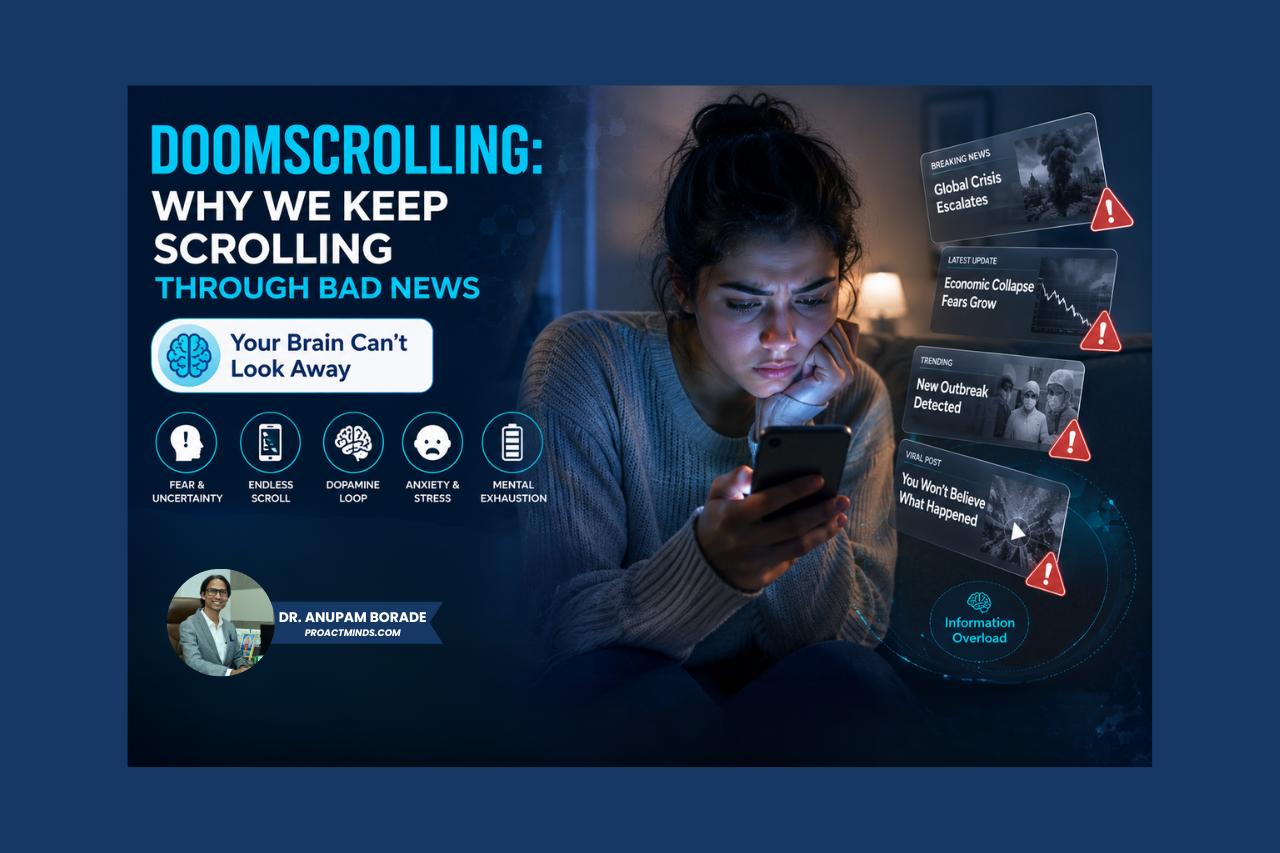
Have you ever picked up your phone to quickly check the news or social media, only to find yourself scrolling through negative updates for much longer than intended? If so, you’ve likely experienced doomscrolling.
In today’s digital world, endless access to news, social media, and online content can make it difficult to disconnect. While staying informed is important, constantly consuming distressing information can affect mood, stress levels, and overall mental well-being. Understanding this habit is the first step toward developing a healthier relationship with technology.
What Is Doomscrolling?
A common question people ask is, what is doomscrolling?
Doomscrolling refers to the habit of continuously consuming negative, distressing, or alarming online content, often for extended periods. This can include news updates, social media posts, videos, or articles that focus on crises, conflicts, disasters, or other upsetting topics.
Even when the content causes stress or anxiety, people may feel compelled to keep scrolling in search of more information or updates.
Why Is It Called Doomscrolling?
The term combines the word “doom,” referring to negative or troubling events, with “scrolling,” the action of continuously moving through online content.
It describes a pattern where individuals become caught in a cycle of consuming increasingly distressing information without realizing how much time has passed.
Doomscrolling Meaning and Why It Happens
To understand the doomscrolling meaning, it’s important to recognize that our brains are naturally wired to pay attention to potential threats and risks.
Negative news often grabs attention more quickly than positive information because the brain views it as important for survival. Digital platforms can unintentionally reinforce this tendency by continuously presenting new content that keeps users engaged.
The Need for Information
During uncertain situations, people often seek information to feel more prepared or in control.
However, constantly searching for updates can sometimes have the opposite effect, increasing feelings of worry and overwhelm.
Fear of Missing Out
Many individuals continue scrolling because they fear missing an important update or development.
This desire to stay informed can make it difficult to stop, even when the content is emotionally exhausting.
Endless Content Availability
Unlike traditional news sources, social media platforms provide a constant stream of new content.
This endless availability can make it easy to lose track of time and continue scrolling far longer than intended.
How Doomscrolling Affects Mental Health
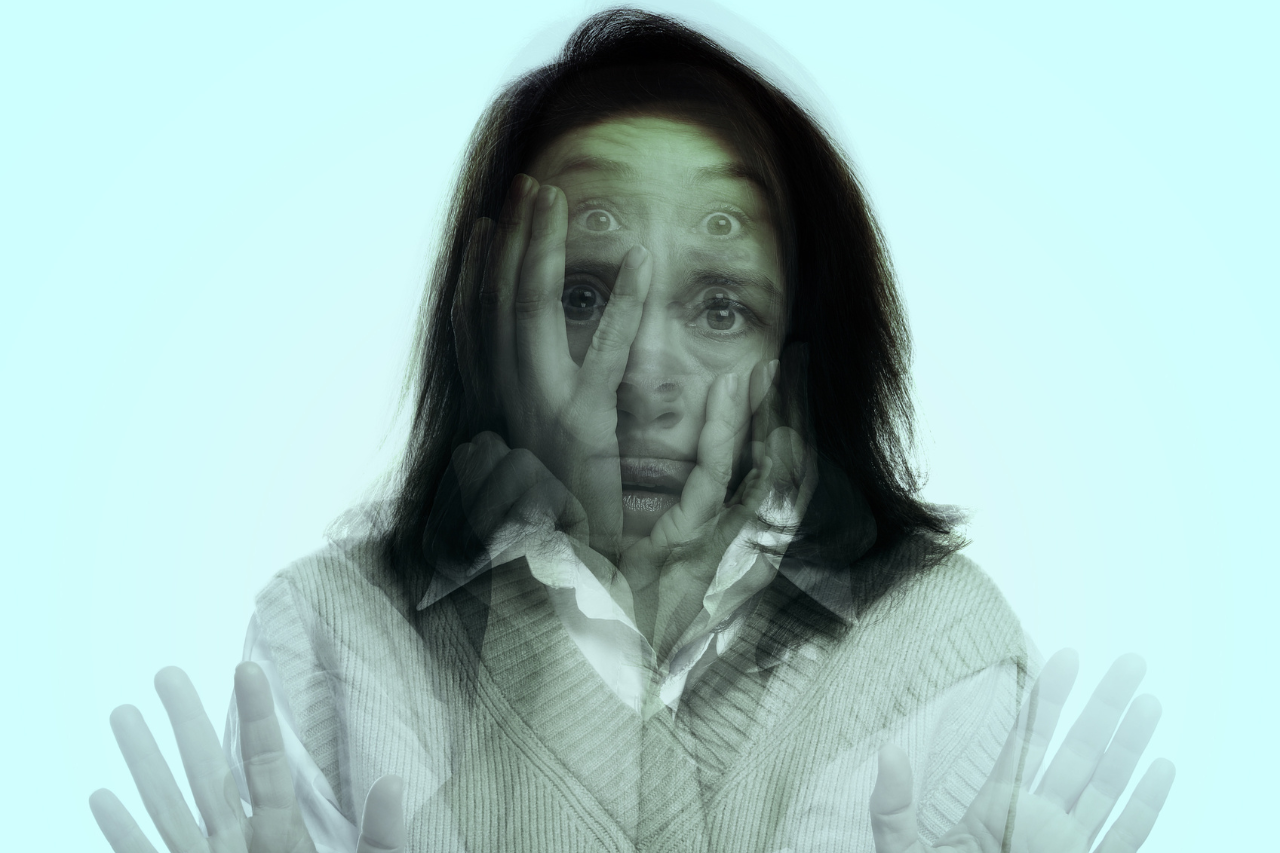
Occasional exposure to negative news is normal, but prolonged doomscrolling may impact emotional well-being over time.
The constant intake of distressing information can create a sense of uncertainty, helplessness, or emotional fatigue.
Increased Anxiety
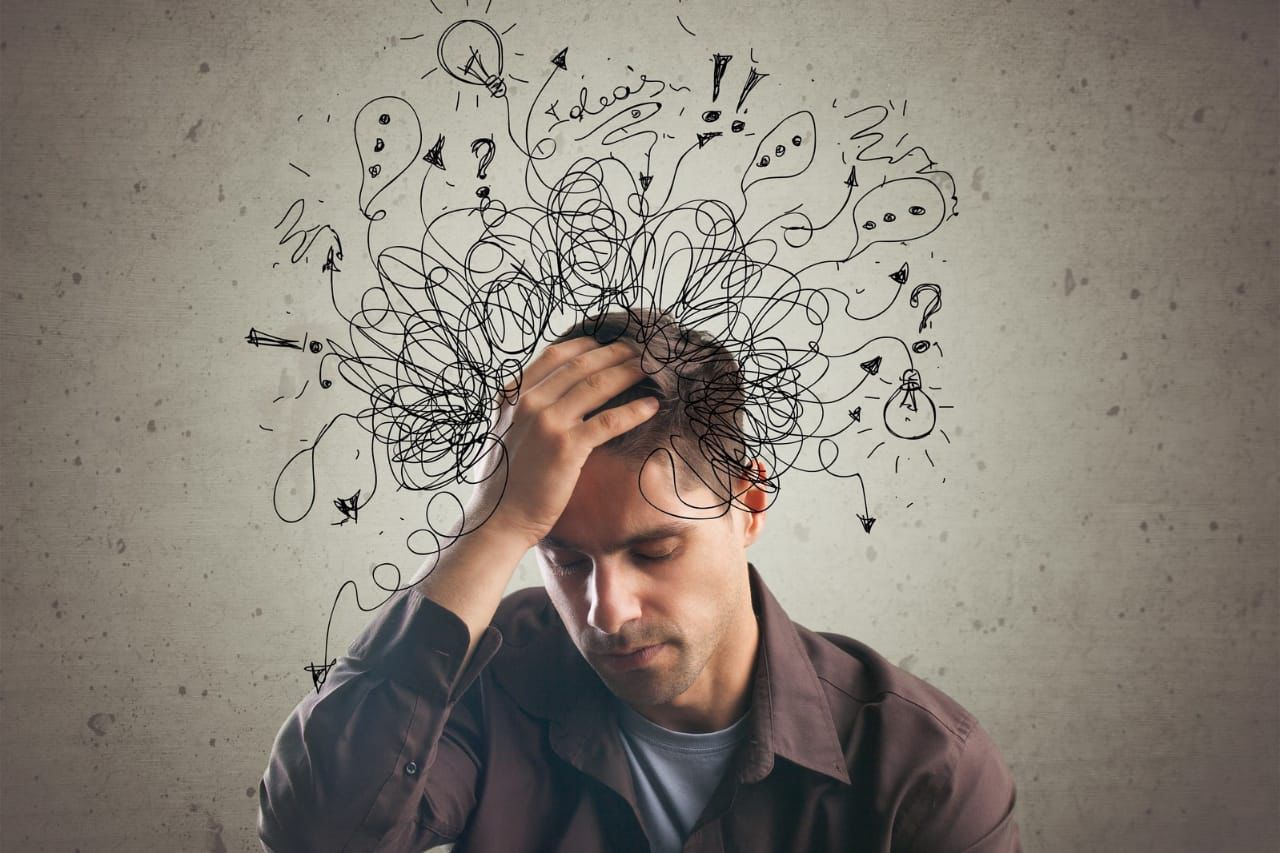
Repeated exposure to upsetting content may heighten feelings of worry and make everyday concerns feel more overwhelming.
Elevated Stress Levels
The brain may remain in a heightened state of alertness when continuously processing negative information.
Over time, this can contribute to increased stress and mental exhaustion.
Difficulty Relaxing
After spending long periods consuming distressing content, it may become harder to mentally switch off and unwind.
Negative Mood Changes
Constant exposure to bad news can influence overall mood and sometimes make the world feel more threatening than it actually is.
Signs That Doomscrolling May Be Affecting You
Many people engage in doomscrolling without realizing how much it influences their thoughts and emotions.
You Lose Track of Time
A quick five-minute check of social media often turns into 30 minutes or more of scrolling.
You Feel Drained After Using Your Phone
Instead of feeling informed, you feel mentally exhausted, anxious, or emotionally overwhelmed.
Negative Thoughts Increase
You find yourself thinking more about worst-case scenarios or feeling preoccupied with negative events.
It Affects Sleep
Scrolling through upsetting content late at night can make it harder to relax and fall asleep.
Why Doomscrolling Feels So Difficult to Stop
Many digital platforms are designed to encourage engagement through continuous content updates.
This creates an environment where there is always one more post, article, or video to view.
Instant Access to Information
News and updates are available at any moment, making it easy to repeatedly check for new developments.
Emotional Triggers
Negative content often generates stronger emotional reactions, encouraging users to continue searching for answers or reassurance.
Habit Formation
Over time, repeatedly checking news or social media can become an automatic habit that feels difficult to break.
How to Reduce Doomscrolling
Completely avoiding news or social media is not always practical, but healthier digital habits can help reduce the impact of doomscrolling.
Set Time Limits
Designate specific times during the day for checking news and social media rather than scrolling continuously.
Follow Reliable Sources
Choose trustworthy sources that provide balanced information instead of constantly consuming sensational content.
Create Screen-Free Time
Taking breaks from digital devices can help reduce mental fatigue and improve focus.
Engage in Offline Activities
Reading, exercising, spending time outdoors, or connecting with loved ones can provide a healthy balance to screen time.
Be Mindful of Your Emotional State
If certain content consistently leaves you feeling anxious or distressed, consider limiting exposure and focusing on activities that support well-being.
Building a Healthier Relationship with Technology
Technology can be a valuable tool for staying informed and connected. The goal is not to eliminate digital media entirely but to use it in a way that supports rather than harms mental health.
Developing awareness of scrolling habits can help individuals make more intentional choices about how they consume information online.
Conclusion
Understanding doomscrolling is important in a world where information is available 24/7. If you’ve ever wondered what is doomscrolling or explored the doomscrolling meaning, it refers to the habit of continuously consuming negative online content, often at the expense of emotional well-being.
While staying informed is valuable, excessive doomscrolling can contribute to stress, anxiety, and mental fatigue. By setting boundaries, practicing mindful media consumption, and creating healthier digital habits, individuals can stay informed without becoming overwhelmed by the constant flow of information.
Frequently Asked Questions
Doomscrolling is the habit of continuously consuming negative or distressing online content, often for extended periods.
Doomscrolling meaning refers to repeatedly scrolling through upsetting news, social media posts, or online content despite experiencing stress or anxiety.
People may doomscroll due to curiosity, fear of missing out, a desire for information, or the constant availability of online content.
Yes. Excessive doomscrolling may contribute to anxiety, stress, emotional fatigue, and difficulty relaxing.
Setting time limits, taking screen breaks, following reliable sources, and engaging in offline activities can help reduce doomscrolling habits.
No. Staying informed involves consuming information in a balanced way, while doomscrolling typically involves excessive exposure to negative content that may affect emotional well-being.