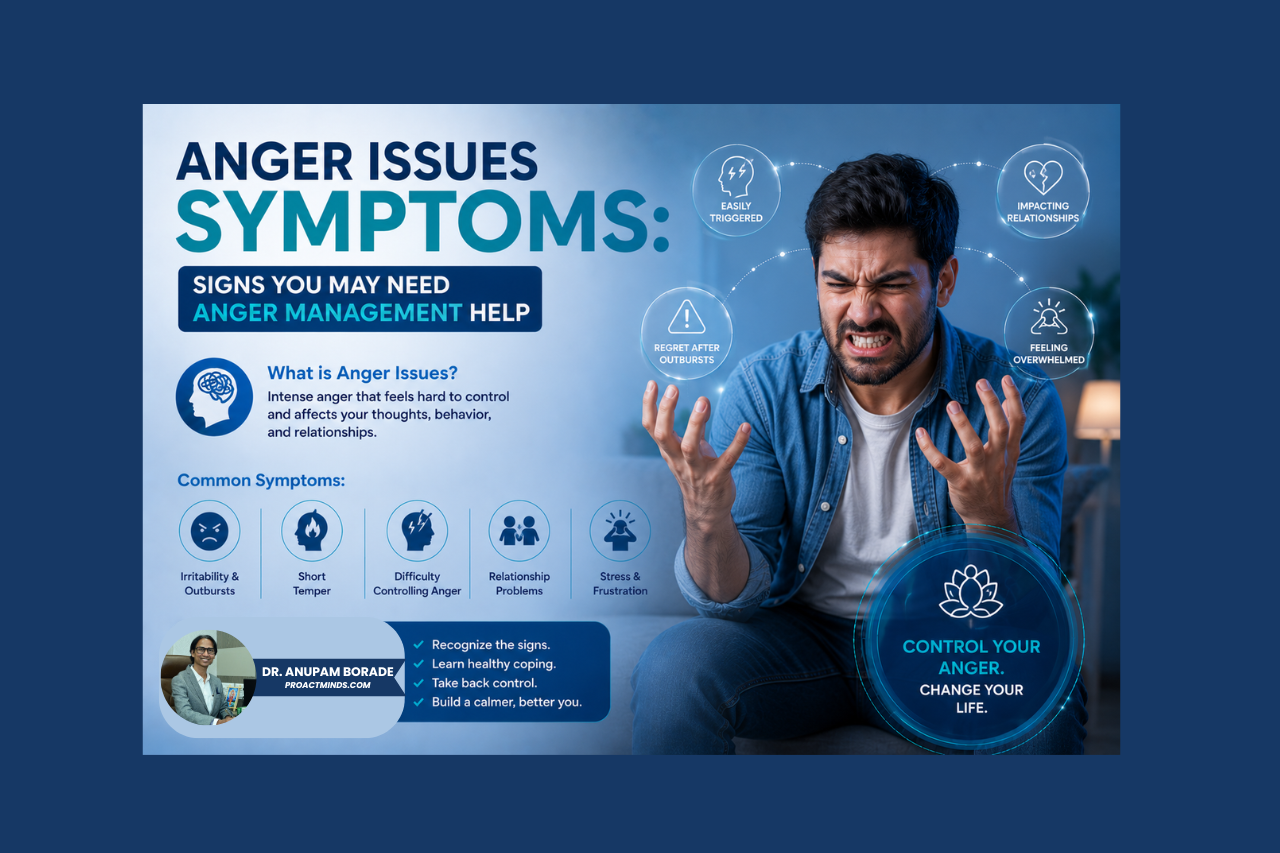
Feeling angry is a natural human emotion. It helps us respond to unfair situations, set boundaries, and express our feelings. However, when anger becomes frequent, intense, or difficult to control, it can start affecting relationships, work, and overall well-being.
Recognizing anger issues symptoms early can help prevent long-term emotional and social consequences. Many people overlook the warning signs until anger begins to interfere with daily life. Understanding anger management issues symptoms can help you identify unhealthy patterns and take the first step toward healthier emotional regulation.
What Are Anger Issues?
Everyone experiences anger differently, but not everyone struggles with anger issues. The difference lies in how often anger occurs, how intense it becomes, and how a person responds to it. Learning to identify the signs early makes it easier to seek support before anger begins to control your life.
Normal Anger vs Problematic Anger
Normal anger is usually a temporary response to a frustrating or upsetting situation. It fades once the issue is resolved. Problematic anger, however, tends to be frequent, intense, and difficult to manage. People experiencing anger issues symptoms may react aggressively, hold grudges, or struggle to calm down even after the triggering event has passed. When these reactions become repetitive, they may indicate the need for professional support.
Physical Symptoms of Anger Issues
Anger doesn’t only affect emotions. It also triggers physical changes in the body as part of the “fight or flight” response. These physical anger issues symptoms can become more noticeable when anger is frequent or prolonged.
Racing Heart and Muscle Tension
One of the earliest physical responses to anger is an increased heart rate. The body prepares to react by releasing stress hormones, causing muscles to tighten and breathing to become faster. Persistent muscle tension, especially in the shoulders and neck, is one of the common anger management issues symptoms experienced by many individuals.
Flushing, Headaches, Clenched Jaw
Anger may also cause facial flushing, excessive sweating, headaches, or a tightly clenched jaw. Some people notice trembling hands or stomach discomfort during intense emotional episodes. If these physical reactions occur regularly, they may be important anger issues symptoms that shouldn’t be ignored.
Emotional and Behavioral Symptoms of Anger Issues
While physical changes are easier to notice, emotional and behavioral patterns often have the greatest impact on everyday life. These symptoms can affect communication, relationships, and decision-making.
Irritability and Outbursts
People with anger issues often become irritated over minor inconveniences. Small disagreements may quickly escalate into shouting, arguments, or emotional outbursts. Frequent frustration, impatience, and losing control are common anger issues symptoms that can strain personal and professional relationships.
Resentment and Difficulty Calming Down
Some individuals continue replaying upsetting situations long after they occur. They may hold onto resentment, find it difficult to forgive others, or struggle to calm themselves after becoming angry. These ongoing emotional reactions are often overlooked anger management issues symptoms that may require attention.
Anger Management Issues Symptoms — Recognizing the Pattern
Occasional anger is normal, but repeated patterns of uncontrolled anger often indicate a deeper issue. Understanding anger management issues symptoms helps identify when professional intervention may be beneficial.
Recurring Triggers
People experiencing anger management difficulties often notice that similar situations repeatedly trigger intense reactions. Criticism, rejection, traffic, workplace stress, or family conflicts may consistently lead to overwhelming anger. Identifying recurring triggers is an important step in learning healthier coping strategies.
Impact on Relationships and Work
One of the clearest anger management issues symptoms is the negative effect anger has on relationships and career growth. Frequent arguments, damaged friendships, conflicts with colleagues, and communication problems often result from uncontrolled emotional reactions. Over time, these patterns can create feelings of isolation and regret.
Avoidance and Suppression Behaviors
Not everyone expresses anger openly. Some people suppress their emotions to avoid conflict, only for the anger to build internally. This suppression may eventually lead to emotional breakdowns, passive-aggressive behavior, or sudden explosive reactions. Both uncontrolled expression and unhealthy suppression are significant anger issues symptoms.
Causes of Anger Issues
Anger is rarely caused by a single factor. It often develops from a combination of life experiences, emotional struggles, and mental health conditions. Understanding the root cause makes treatment more effective.
Stress and Past Trauma
Chronic stress can lower emotional tolerance, making it easier to react with frustration or aggression. Past traumatic experiences, unresolved emotional pain, or childhood adversity can also contribute to persistent anger. In many cases, addressing these underlying experiences helps reduce recurring anger issues symptoms.
Underlying Mental Health Conditions (Anxiety, Depression, ADHD)
Mental health conditions such as anxiety, depression, ADHD, bipolar disorder, and certain personality disorders may influence emotional regulation. Individuals experiencing these conditions may also display anger management issues symptoms, making a comprehensive mental health assessment an important part of treatment.
When Anger Becomes a Problem
Anger becomes a concern when it consistently affects your ability to function, maintain healthy relationships, or make sound decisions. Recognizing the impact of anger is often the first step toward positive change.
Relationship Impact
Uncontrolled anger can damage trust, create emotional distance, and increase conflict with family members, friends, or partners. Frequent criticism, verbal aggression, or emotional withdrawal can leave lasting effects on relationships, even after the anger has subsided.
Workplace and Legal Consequences
Persistent anger can affect workplace performance through conflicts with coworkers, poor teamwork, and disciplinary action. In severe cases, aggressive behavior may result in legal consequences or physical altercations. Identifying anger issues symptoms early can help prevent these long-term outcomes.
How to Manage Anger Issues
The good news is that anger can be managed effectively with the right strategies and professional guidance. Learning healthier ways to respond to emotions improves both mental well-being and interpersonal relationships.
Coping Techniques
Simple techniques such as deep breathing, mindfulness, physical exercise, journaling, and taking a short break during stressful situations can help reduce emotional intensity. Identifying personal triggers and practicing relaxation techniques regularly can also minimize anger management issues symptoms over time.
Anger Management Therapy and Programs
Professional therapy provides practical tools for understanding emotional triggers and developing healthier responses. Cognitive Behavioral Therapy (CBT), anger management programs, and individual counseling help individuals build emotional awareness, improve communication skills, and manage conflict more effectively. Seeking help early can significantly reduce anger issues symptoms and improve overall quality of life.
Experiencing anger doesn’t make someone a bad person, but ignoring persistent anger can have lasting consequences. Recognizing anger issues symptoms and understanding anger management issues symptoms allows individuals to take proactive steps toward healthier emotional regulation.
At Proact Minds, experienced mental health professionals provide compassionate support and evidence-based therapies to help individuals manage anger, strengthen relationships, and lead more balanced lives.
Frequently Asked Questions
Common triggers include stress, frustration, criticism, unresolved trauma, financial difficulties, relationship conflicts, and underlying mental health conditions. Triggers vary from person to person and often develop over time.
Yes. Anxiety and depression can sometimes present as irritability, frustration, or increased emotional sensitivity. In many individuals, persistent anger may be a sign of an underlying mental health condition.
If anger frequently affects your relationships, work, decision-making, or causes repeated emotional outbursts, it may be time to seek professional support. Difficulty calming down and recurring conflicts are common indicators.
Yes. Many people successfully manage anger through psychotherapy, Cognitive Behavioral Therapy (CBT), stress management techniques, mindfulness practices, and anger management programs. Medication is generally recommended only when an underlying mental health condition requires it.