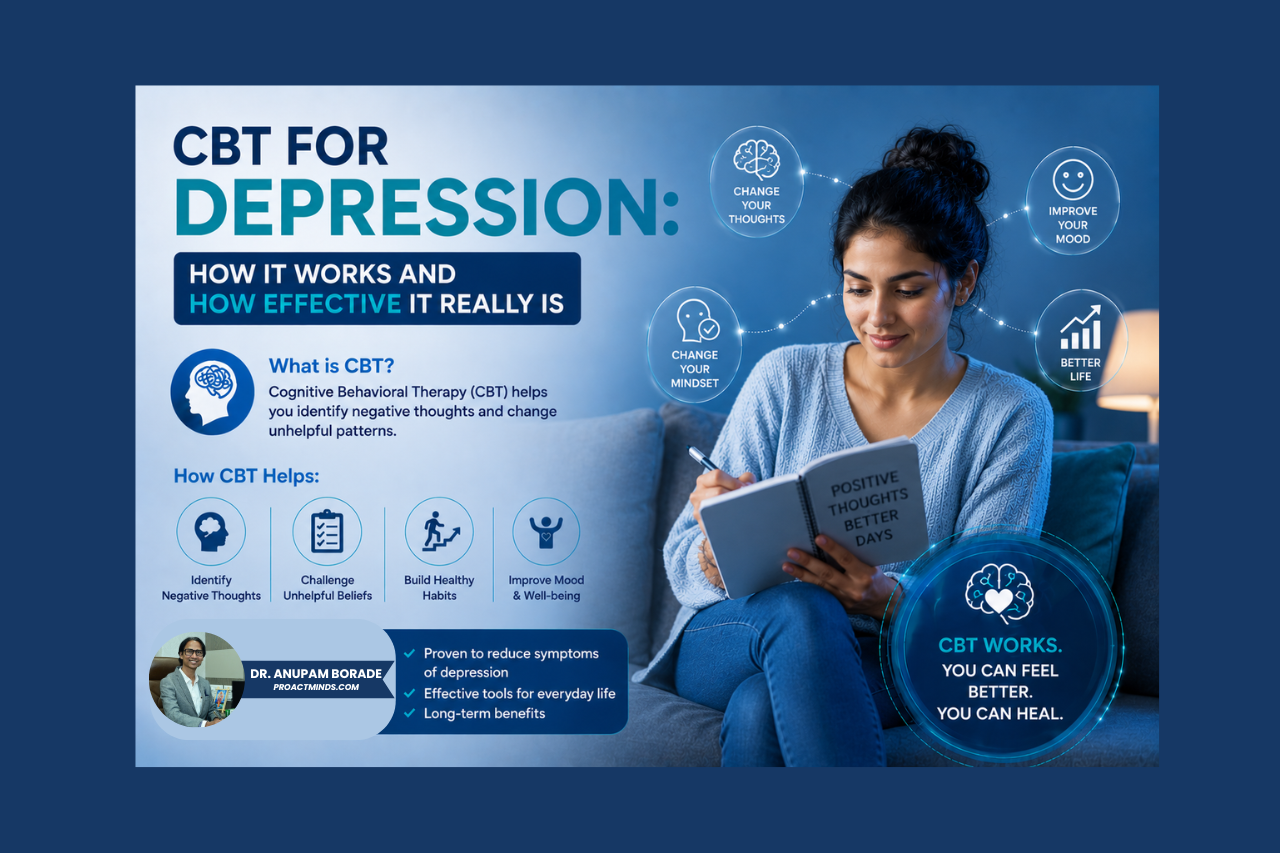
Depression can make even the simplest daily tasks feel overwhelming. It affects the way people think, feel, and behave, often creating a cycle of negative thoughts and emotions that seems impossible to break. While medication is an important treatment option for some individuals, therapy plays an equally significant role in recovery.
One of the most widely recommended psychological treatments is CBT for depression. Known for its practical and evidence-based approach, CBT therapy for depression helps individuals identify unhealthy thought patterns, develop healthier coping strategies, and regain control over their lives. Let’s explore how it works and the effectiveness of CBT for depression.
What Is CBT Therapy for Depression?
Cognitive Behavioral Therapy (CBT) is a structured form of psychotherapy that focuses on the connection between thoughts, emotions, and behaviors. Instead of only exploring past experiences, CBT teaches practical skills that help individuals manage current challenges and reduce depressive symptoms.
Core Principles of CBT
The foundation of CBT therapy for depression lies in the understanding that thoughts influence emotions, and emotions influence behavior. Negative thinking patterns often reinforce feelings of sadness, hopelessness, and low motivation. CBT helps individuals recognize these patterns, question their accuracy, and replace them with healthier, more balanced perspectives.
The Thought-Feeling-Behavior Model
One of the key concepts in CBT for depression is the thought-feeling-behavior model. For example, believing “I’m not good enough” may lead to sadness and withdrawal from social activities, which can further deepen depression. CBT helps break this cycle by teaching individuals to identify negative thoughts and respond to them in more constructive ways.
How CBT for Depression Works
Unlike passive forms of therapy, CBT is highly collaborative. Therapists and clients work together to identify challenges, set goals, and practice practical techniques that can be applied in everyday life.
Cognitive Restructuring
Cognitive restructuring is one of the most effective techniques used in CBT therapy for depression. It involves identifying distorted thought patterns, such as catastrophizing or self-criticism, and replacing them with more realistic and balanced thinking. Over time, this process helps reduce emotional distress and improves decision-making.
Behavioral Activation
Depression often causes people to withdraw from activities they once enjoyed. Behavioral activation encourages individuals to gradually reintroduce meaningful activities into their daily routine. Even small achievements, such as taking a short walk or completing a simple task, can improve mood and motivation, making this an essential part of CBT for depression.
Thought Records and Homework
CBT extends beyond the therapy room. Individuals are often given thought records, journaling exercises, or practical assignments to complete between sessions. These activities help reinforce new coping strategies and encourage consistent progress. Homework is one reason why CBT therapy for depression produces long-lasting results.
What to Expect in a CBT Session
Understanding the therapy process can make starting treatment feel less intimidating. CBT follows a structured format that focuses on measurable progress and practical problem-solving.
Session Structure and Duration
A typical CBT session lasts between 45 and 60 minutes. Sessions usually begin by reviewing progress since the previous appointment, discussing current challenges, practicing CBT techniques, and setting goals for the coming week. This structured approach helps individuals stay focused on recovery.
Number of Sessions Typically Needed
The number of sessions depends on the severity of depression and individual needs. Many people benefit from 12 to 20 sessions of CBT for depression, although some may require longer treatment if symptoms are more complex or accompanied by other mental health conditions.
Effectiveness of CBT for Depression
One of the reasons CBT is widely recommended is the extensive research supporting its success. The effectiveness of CBT for depression has been demonstrated across different age groups and levels of symptom severity.
Research and Clinical Evidence
Numerous clinical studies have shown the effectiveness of CBT for depression in reducing depressive symptoms and improving overall quality of life. It is recommended by mental health professionals worldwide because it provides practical skills that individuals can continue using long after therapy ends.
CBT vs Medication Outcomes
Research suggests that CBT therapy for depression can be as effective as antidepressant medication for many individuals with mild to moderate depression. For some people, combining CBT with medication provides even better outcomes, particularly when symptoms are more severe or long-lasting.
Relapse Prevention Data
An important advantage of CBT for depression is its focus on relapse prevention. Rather than offering temporary symptom relief, CBT teaches lifelong coping skills that help individuals recognize early warning signs and respond before symptoms become overwhelming. This contributes significantly to the long-term effectiveness of CBT for depression.
CBT vs Other Depression Treatments
There are several treatment options for depression, and understanding their differences helps individuals make informed decisions about their care.
CBT vs Medication
Medication primarily works by balancing brain chemicals associated with mood regulation, while CBT therapy for depression focuses on changing unhealthy thought patterns and behaviors. Medication may provide quicker symptom relief for some individuals, but CBT equips people with practical skills they can use throughout life. Many treatment plans successfully combine both approaches.
CBT vs DBT and Psychodynamic Therapy
Dialectical Behavior Therapy (DBT) emphasizes emotional regulation and distress tolerance, while psychodynamic therapy explores unconscious thoughts and past experiences. CBT for depression, on the other hand, focuses on present challenges, goal-oriented strategies, and practical solutions. The most appropriate therapy depends on an individual’s diagnosis, symptoms, and treatment goals.
Who Is CBT Best Suited For?
CBT is highly versatile and can benefit individuals experiencing different levels of depression. However, treatment recommendations vary based on symptom severity and personal circumstances.
Mild to Moderate Depression
People experiencing mild to moderate depression often respond very well to CBT therapy for depression. The structured techniques help reduce negative thinking, improve coping skills, and restore motivation, allowing individuals to regain confidence in managing everyday life.
Severe Depression and Comorbid Conditions
For individuals with severe depression or co-existing conditions such as anxiety, obsessive-compulsive disorder, or substance use disorders, CBT for depression is often combined with medication or additional therapeutic approaches. A personalized treatment plan ensures the best possible outcome.
Finding a CBT Therapist
Choosing the right therapist plays an important role in successful treatment. Working with a qualified mental health professional ensures that therapy is evidence-based and tailored to individual needs.
Credentials to Look For
Look for licensed psychologists, psychiatrists, counselors, or psychotherapists with specialized training in Cognitive Behavioral Therapy. Experience in treating depression and related mental health conditions is also an important factor when selecting a therapist.
Online vs In-Person CBT
Both online and in-person CBT therapy for depression have been shown to be effective. Online therapy offers flexibility and accessibility, while in-person sessions may feel more comfortable for individuals who prefer face-to-face interaction. The best option depends on personal preference, availability, and lifestyle.
Depression can feel isolating, but effective treatment is available. The proven effectiveness of CBT for depression, combined with its practical and structured approach, has helped millions of people improve their mental well-being. Whether you’re considering CBT therapy for depression for yourself or someone you care about, seeking support is a positive first step.
Frequently Asked Questions
Most individuals benefit from 12 to 20 sessions of CBT for depression, although the exact number varies depending on symptom severity, treatment goals, and individual progress.
CBT is highly effective for many people, but no single treatment works for everyone. Some individuals may benefit from combining CBT therapy for depression with medication or other therapeutic approaches.
For many people with mild to moderate depression, CBT therapy for depression can be as effective as antidepressants. In more severe cases, combining therapy with medication often provides the best results.
Yes. Online CBT for depression has been shown to be effective for many individuals. It offers greater flexibility while delivering the same evidence-based techniques used in traditional face-to-face therapy.